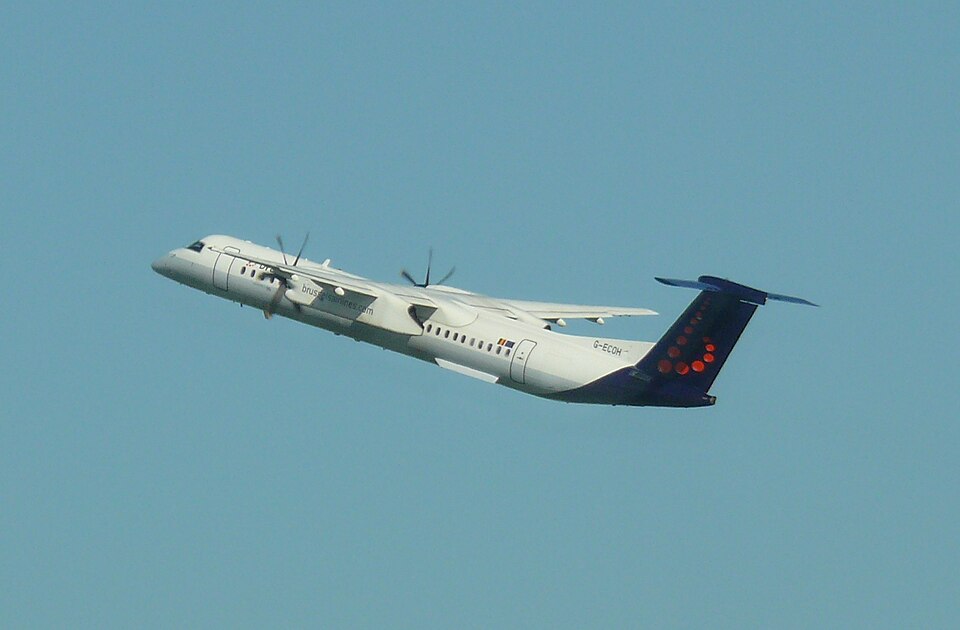
Incident Details
On 7 February 2014 at 0922 UTC, a DHC-8-402 Dash 8, registration G-ECOH, encountered sudden severe turbulence while in cruise flight over the Isle of Man. The aircraft was operating a scheduled passenger flight from Birmingham Airport to Belfast City Airport. It had been cruising at Flight Level 220 for 17 minutes in visual meteorological conditions with seatbelt signs off when the turbulence occurred without warning.
Flight History
The turbulence onset was abrupt, causing the airspeed to increase rapidly and the autopilot to disconnect. The aircraft climbed to a maximum of FL225 before the co-pilot, who was the pilot flying, took manual control, reduced power, and descended back to FL220. The autopilot was re-engaged after 25 seconds. The severe turbulence subsided after a few seconds but remained moderate, prompting the flight crew to initiate a descent.
In the passenger cabin, a cabin crew member was thrown off her feet and sustained serious injuries. A doctor traveling as a passenger provided medical assistance, and she was transferred to hospital after landing at Belfast. One passenger suffered a minor injury.
Meteorological Assessment
The Met Office provided an aftercast, reviewing available data to assess the possibility of Clear Air Turbulence (CAT). The analysis indicated that a large windshear near the Isle of Man, associated with two strong jetstreams, likely caused the turbulence. Cumulonimbus activity was not considered a factor. The significant weather charts available to the crew, issued 24 hours prior, did not show CAT in the area.
Aircraft Inspection
The aircraft was inspected after the incident in accordance with the Aircraft Maintenance Manual, and no damage was found.
Recorded Data
Flight data recorder information showed normal acceleration reaching +2.74g and -0.43g during the event. Radar data revealed no evidence of wake turbulence from other aircraft.