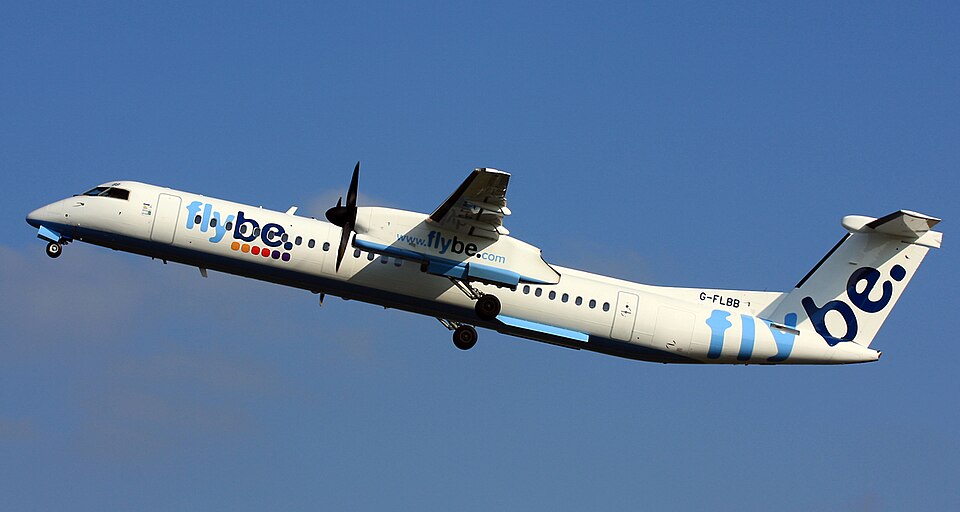
History of the Flight
The aircraft, a DHC-8-402 registered G-FLBB, departed Manchester at 0705 hrs on 8 December 2016 for a scheduled passenger flight to Jersey with 4 crew and 23 passengers. After climbing to FL250, approximately two minutes into the cruise, a master warning with a triple chime alert indicated a loss of cabin pressurisation. The co-pilot called for oxygen and donned his mask, while the commander handed control to the co-pilot and directed him to initiate a descent and inform ATC. The co-pilot began a descent using the autopilot, then disengaged it to manually fly at 3,500 fpm. The commander donned his mask, retook control, re-engaged the autopilot, and declared a MAYDAY. The aircraft stabilised at FL100, the commander cancelled the MAYDAY, and obtained clearance to continue to Jersey at FL100. The flight landed without further incident, and passengers disembarked normally; no injuries occurred.
Recorded Information
The aircraft was equipped with a flight data recorder (FDR) and cockpit voice recorder (CVR). The FDR recorded the entire flight, including the master warning. The cabin altitude warning remained illuminated for 7 minutes 48 seconds and extinguished upon reaching FL100. No other systems were affected. The CVR did not capture the event because it was not secured until about 1 hour 40 minutes after landing, overwriting the event.
Operator’s Procedures
The operator’s manual required preservation of flight recorder data after a serious incident. The commander stated he was busy on the phone after shutdown and did not secure the recorders; a maintenance company later pulled the CVR circuit breaker. The operator noted that the procedure was not followed and highlighted this as an error.
Aircraft Information
The Bombardier DHC-8-402 is a high-wing regional aircraft with a service ceiling of 25,000 ft. Cabin pressurisation is supplied by engine bleed air and controlled by an outflow valve on the aft pressure bulkhead. The flight crew has fixed emergency oxygen supplies from a nose-mounted cylinder.
Aircraft Examination
The aircraft was flown unpressurised back to Manchester for fault diagnosis. The outflow valve (serial number 00369) was identified as the cause of the depressurisation. The valve was replaced, and the aircraft returned to service.
Component History
The outflow valve had a history of pressurisation issues on other aircraft. It was originally fitted to G-ECOT, removed during a fault diagnosis in April 2015, then fitted to G-KKEV in September 2015, where it caused a cabin altitude rate increase. After replacement on G-KKEV, it was fitted to G-FLBB on 7 December 2016 to address an erratic pressurisation in descent. The day after installation, the loss of cabin pressure occurred. The valve was removed and quarantined for reliability investigation by the spares provider and OEM.
Cockpit Crew Actions
The co-pilot reacted quickly, donning his mask and initiating the descent. The commander, who was completing a technical log entry, experienced an electronic flight bag falling from the windscreen. After the event, both crew members reported feeling slightly lightheaded. The commander later noted difficulty with the simple task of writing the log, suggesting he may have been slightly hypoxic before the warning. The co-pilot manually increased the descent rate to 3,500 fpm but later felt he should not have deselected the autopilot. The commander experienced microphone difficulties with his oxygen mask and swapped masks. The crew completed QRH actions and informed passengers over the PA.
Cabin Crew Actions
The senior cabin crew member and cabin attendant felt the aircraft descend and saw seat belt signs illuminate. They noticed their ears popping but did not associate it with depressurisation. They were initially unable to contact the cockpit but secured the cabin. Communication was established as the aircraft descended through FL150. Their actions maintained cabin and passenger safety despite not knowing the specific problem.
Technical Log
The commander had noted a technical log entry regarding the pressurisation problem from the previous day. The senior cabin crew member was aware of the issue as she had flown in the aircraft recently. With hindsight, the commander felt he would have briefed the crew on potential outcomes had time allowed.
Conclusions
The technical cause of the pressurisation problem was the outflow valve, serial number 00369, which had a history of being causal or contributory to pressurisation issues on other aircraft. The problem did not manifest during post-installation functional checks.