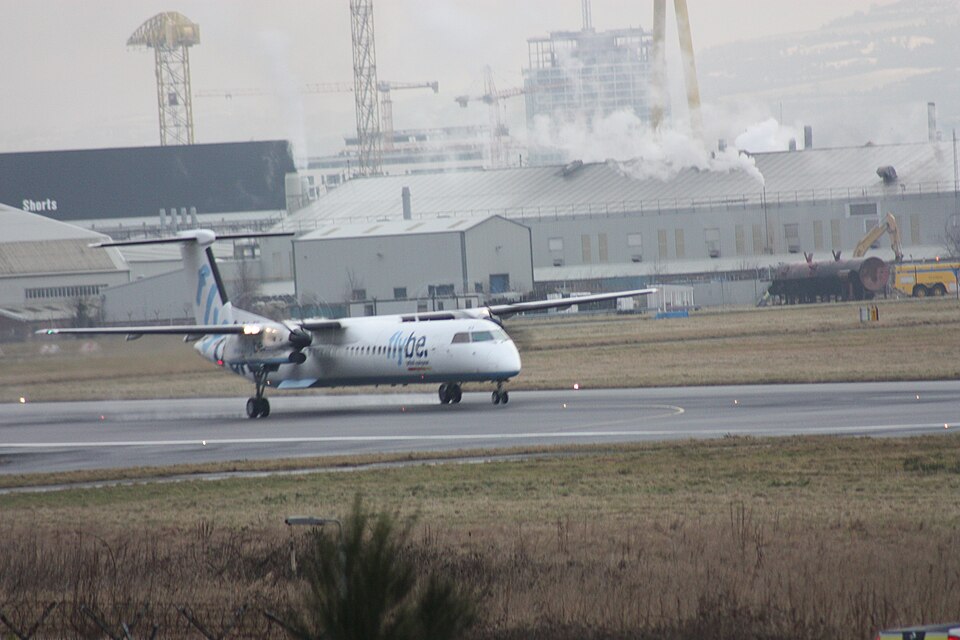
Incident
On 5 August 2017, a DHC-8-402 Dash 8 aircraft (registration G-JECI) was en route from Inverness Airport to Jersey Airport when the co-pilot experienced a seizure during cruise at Flight Level 250. The seizure led to inadvertent rudder pedal inputs, causing the autopilot to disconnect. The aircraft commander, who was the pilot monitoring, took control and became the pilot flying.
Flight History
The flight was at FL250 with light workload. The commander noticed the co-pilot shaking, with tense hands and arms, leaning back, and looking upward. After three unanswered calls, the commander attempted a public address but inadvertently selected the intercom. The senior cabin crew member (SCCM) responded and proceeded to the flight deck. During her movement forward, the aircraft slewed, causing cabin attendant 3 (CA3) to fall; she was helped by a passenger. The commander informed the SCCM of the seizure. The SCCM observed the co-pilot with a grey face, blue lips, and rigid body, but still breathing. She moved his seat back, removed his legs from the controls, and attempted to secure his arms, but they were too stiff. The rudder pedal adjustment handle could not be operated.
A second, more violent seizure occurred, with flailing limbs causing multiple rudder inputs and the autopilot disconnection. The pilot flying counteracted the inputs carefully to avoid control reversal.
Crew Response
The pilot flying declared a PAN with Air Traffic Control and requested an immediate diversion to Manchester Airport, the nearest suitable aerodrome. ATC offered a direct routing, but the pilot chose a Standard Terminal Arrival Route to manage workload. He reported difficulty entering data into the Flight Management System due to distractions. The crew discussed concerns about further seizures; removing the co-pilot was deemed impractical. The pilot asked for an able-bodied passenger (ABP), who was selected by CA3 and briefed to remain at the flight deck door.
Landing and Aftermath
During final approach, the co-pilot's condition improved slightly, and he recognized Manchester. The SCCM continued restraining him. The approach and landing were uneventful. Manchester ATC provided a 'Follow Me' vehicle to a remote stand, where paramedics boarded and took the co-pilot to hospital. CA3 sustained minor injuries and bruising from her fall. The co-pilot was released after three hours. He had shown no prior symptoms. No other crew or passengers were affected.
Recorded Information
Flight Data Recorder and Quick Access Recorder data confirmed that the rudder pedal inputs were the initiating event causing the autopilot disconnect.