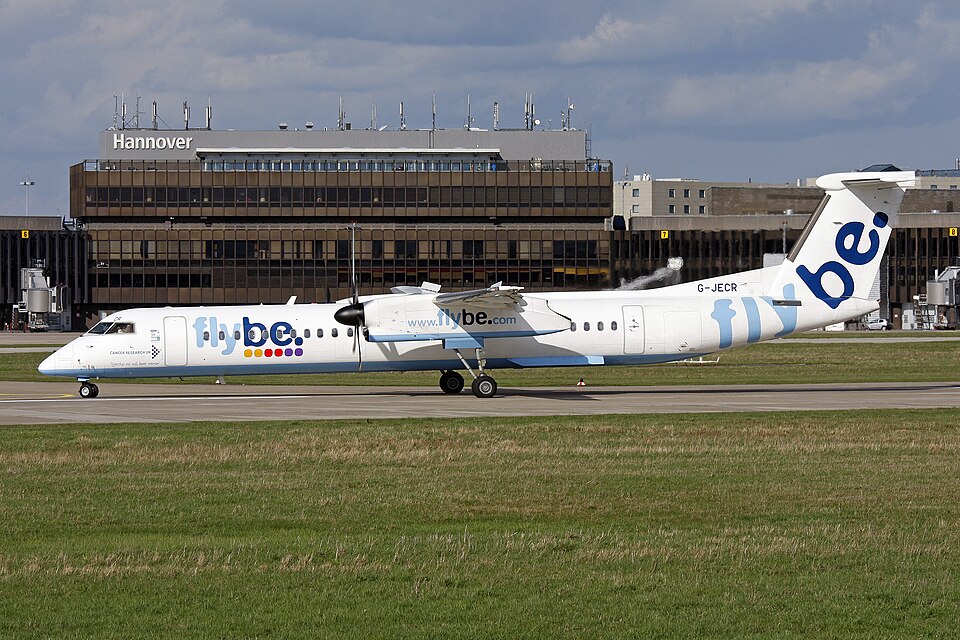
History of the Flight
On 3 February 2016, a Bombardier DHC-8-402 Dash 8, registration G-JECR, departed from Birmingham on a scheduled commercial passenger flight to Aberdeen. The aircraft was climbing to Flight Level 190 with the commander as pilot monitoring and the co-pilot as pilot flying. At approximately 1659 UTC, while passing over the Pennines at FL170, the crew heard a mechanical noise followed by a loud sound of rushing air. The commander suspected a rapid loss of cabin pressure, which was confirmed by a high rate of climb indicated on the cabin altitude gauge and illumination of the pressurisation fault light on the overhead panel. However, no cabin pressure warning appeared on the Central Warning Panel, and no audio warnings sounded.
The co-pilot levelled the aircraft at FL174 and selected altitude hold. Both pilots experienced light-headedness, chest tightness, and tingling in their fingers. The commander ordered the use of oxygen, and the co-pilot initiated an emergency descent with a vertical speed of 3,500 ft/min, setting the autopilot to FL100. A MAYDAY was declared.
In the passenger cabin, the cabin crew did not hear the mechanical noise or rushing air but noticed the change in aircraft attitude and engine note during the descent. The Senior Cabin Crew Member contacted the flight crew via interphone, who confirmed the emergency descent. The cabin was secured, and both cabin crew members took their seats. They reported ear popping, and one felt faint, subsequently using oxygen.
After levelling at FL100, the commander completed the emergency descent checklist and consulted the pressurisation fault light drill. He decided it was preferable to divert and land as soon as possible. He completed the checklist for unpressurised flight, briefed the cabin crew, and announced the diversion to Manchester to the passengers. The aircraft landed at Manchester Airport without further incident.
Engineering Investigation
Post-flight inspection focused on door seals, with no defects found. Following the Fault Isolation Manual procedure for the pressurisation fault light, both the Cabin Pressure Controller module and the Outflow Valve were replaced. The aircraft then underwent a pressurisation check, which was normal, and it was returned to service.
Analysis of the Flight Data Recorder indicated that no cabin pressure warning had been annunciated; such a warning would occur if the cabin altitude exceeded 10,400 ft. The removed components were sent to the manufacturer for strip examination. The Controller module showed no defects, but the Outflow Valve failed several tests and exhibited contamination and wear. It was considered unserviceable and responsible for the depressurisation.