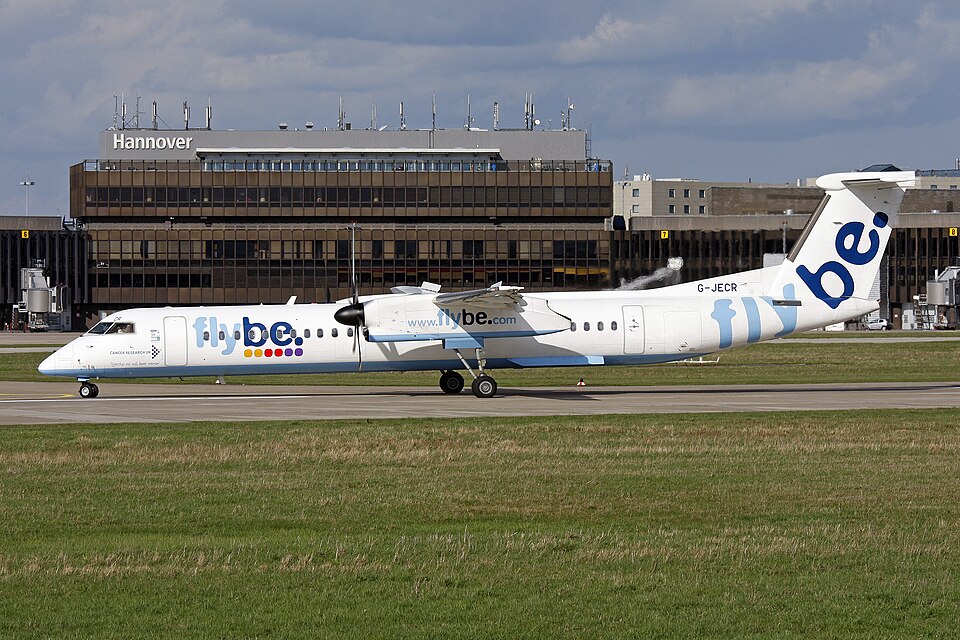
Incident Overview
On 15 November 2018, a De Havilland Canada DHC-8-402 Dash 8 Q400 (registration G-JECR) was climbing to Flight Level 190 en route to Charles de Gaulle Airport, Paris, when the flight crew received an alt mismatch message on the primary flight display. The crew elected to return to Exeter Airport, where the aircraft landed without further incident. The commander, aged 39, held an Airline Transport Pilot’s Licence and had 7,200 total flying hours, including 5,800 on type. There were 4 crew and 35 passengers on board; no injuries were reported and the aircraft sustained no damage.
Flight History
The aircraft had undergone a standard maintenance check at the operator’s facility at Exeter Airport prior to the incident flight, which included cleaning and leak checks of the pitot static system. The weather at the time of departure was benign, with a temperature of approximately 9°C. The commander completed a pre-flight walkaround and observed nothing unusual. The aircraft pushed back at 0706 hrs; pushback, engine start, and taxi were normal. Pitot heat was selected on as the aircraft entered the runway. The takeoff roll was uneventful, and the 80 kt airspeed cross check revealed no discrepancy.
At approximately 500 ft above aerodrome level, an alt mismatch message briefly appeared. The flight crew reduced the rate of climb while discussing the message. The mismatch reappeared intermittently throughout the climb. At FL190, the commander’s altimeter showed 18,860 ft, the co-pilot’s altimeter showed 19,000 ft, and the standby altimeter showed 18,920 ft. Airspeed was consistent with pitch and power, but the two primary airspeed indications differed by 3 to 4 kt. The crew actioned the Quick Reference Handbook drill and, in consultation with the operator, decided to return to Exeter. The descent, approach, and landing were uneventful.
Recorded Data
The aircraft was equipped with a 25-hour flight data recorder (FDR) and a wireless Quick Access Recorder (QAR). Analysis of the FDR data showed that shortly after takeoff, altitude from Air Data Unit 1 (ADU1) under-read ADU2 by about 50 to 60 ft, varying between 20 and 70 ft during climb. Airspeed from ADU1 under-read ADU2 by about 3 kt. At FL190, the altitude difference increased to about 140 ft, and the airspeed difference remained at about 3 kt. When cruise airspeed was reduced from 230 to 190 kt, the altitude difference reduced to about 100 ft. During descent, the altitude difference reduced to about 20 ft, and airspeed difference briefly increased to 5 kt.
A review of previous flights of G-JECR and other aircraft of the same type indicated that during climb a normal altitude difference of 20 to 30 ft is seen, reducing to a few feet in cruise and about 5 ft during approach. Normal airspeed differences are about 1 kt during climb and cruise, increasing to about 3 kt during approach.
Aircraft Examination
Post-flight inspection revealed white crystalline deposits covering three of the four static pressure holes on the left primary pitot static probe (ADU1). The deposits were lightly adhered and were removed by a technician but not retained. The right primary and standby probes were clear. Pressure pipes were cleaned per the Aircraft Maintenance Manual (AMM) with nothing significant found. After deposit removal, functional and leak checks were satisfactory.
The left pitot static probe was removed and examined in a laboratory. Trace amounts of white residue were visible around two aft and the inboard forward static holes. Inside the outboard rear static hole, enough residue remained for chemical analysis. No holes were fully blocked. Videoscope inspection found no blockages, only trace amounts of environmental debris.
Chemical analysis using Fourier Transform Infra-Red (FT-IR) spectroscopy and Scanning Electron Microscopy with Energy Dispersive X-ray (SEM-EDX) spectroscopy indicated elevated levels of silicone and fluorine, along with other inorganic elements, suggesting a lubricating product such as grease. The presence of inorganic elements suggested environmental material had collected over time.
Maintenance and Test Equipment
The air data accessory kit used for pitot static system checks includes three pitot static probe adaptors, pneumatic hoses, pre-test probes, and lubricating fluid LF5050 (a glycol and water mix). During interviews, it was mentioned that a silicone-containing grease (DC4 compound) had been used to improve the seal between a test adaptor and the probe. The manufacturer’s instructions did not approve such products. The crystalline deposit was consistent with a non-approved lubricant.
The investigation concluded that the use of a non-approved product to improve the seal between the test adaptor and the pitot static probe during maintenance immediately prior to the flight may have resulted in the blockage of the static holes, leading to the alt mismatch message.