Incident Summary
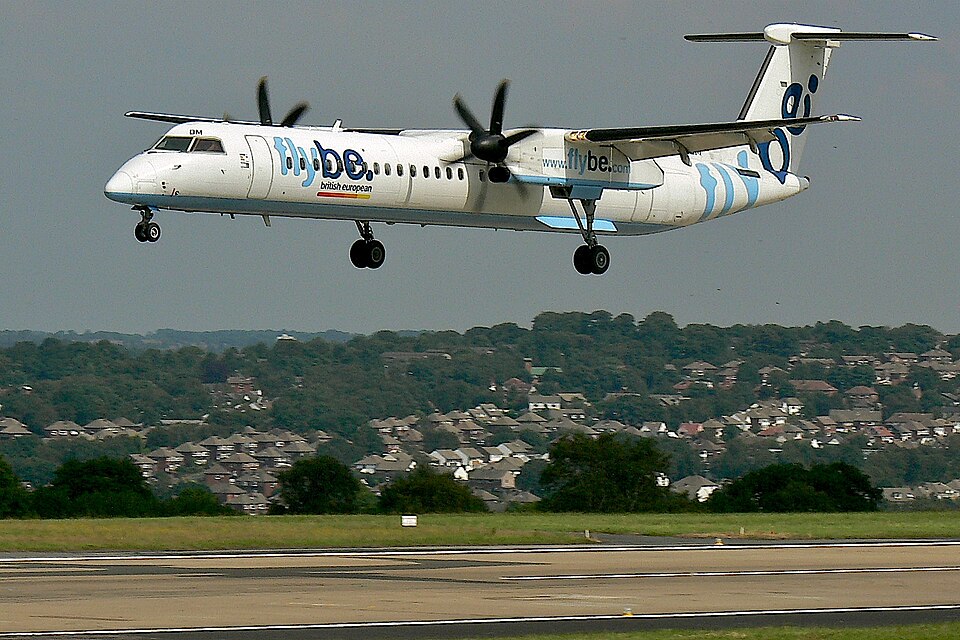
On 19 January 2015 at 1014 hrs, a DHC-8-402 Dash 8, registration G-JEDM, operated as a commercial passenger flight from Manchester, experienced a loss of control while vacating Runway 23 at Inverness Airport. After landing, air traffic control instructed the crew to continue to the end of the runway and take exit A1 to the right. As the aircraft turned onto the taxiway, it entered an uncontrollable slide to the left, coming to rest with all three landing gears on the grass. There were no injuries to the 4 crew or 47 passengers, and no damage to the aircraft.
Flight History
The commander reported that the aircraft slowed with minimal braking required during the landing roll. As he commenced the right turn at exit A1, he lost control, and the aircraft slid sideways to the left. After coming to rest on the grass parallel to the taxiway centreline, the crew requested assistance from rescue services, shut down the engines, and after inspection of the landing gear by the Airport Fire Service, passengers disembarked safely.
An Airport Operations Assistant, who observed the landing, reported that the aircraft appeared to be travelling unusually fast as it reached the end of the runway. He heard the tyres squeal during the turn and raised the alarm when the aircraft went onto the grass.
Airport Authority Report
The airport authority conducted a detailed investigation, noting that the runway and taxiways were de-iced between 0745 and 0847 hrs that morning, with a subsequent inspection finding no evidence of icy patches. A refractometer test of the applied fluid gave a freezing point of -24°C. Painted markings were not judged to be slippery, and tyre marks were visible on the paved surface where the aircraft turned. The report concluded that the presence of tyre marks and witness evidence of tyre squeal indicated adequate friction between the tyres and the surface.
Flight Data Recorder Data
Analysis of the Flight Data Recorder showed minimal braking action during the landing roll. At the point of turning into exit A1, the aircraft's groundspeed was 29 knots. No anomalies were found with the braking system. The commander later conceded that he had been taxiing slightly higher than normal taxi speed, citing wet conditions with de-icing fluid and some icy patches.