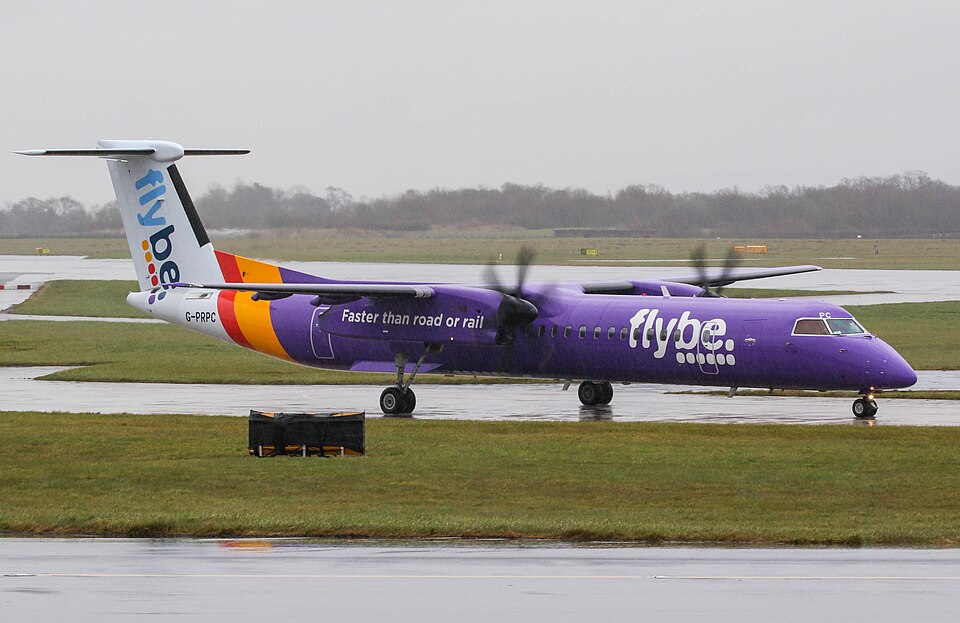
History of the Flight
During the previous sector, the crew had difficulty controlling cabin temperature. During a busy turnaround at Belfast City Airport, the commander performed a reset of the air conditioning packs using the Q400 'Supplemental Procedure Ground Reset Guide'. The aircraft departed at 1805 hrs and climbed to FL170.
Shortly after reaching cruise level, at 1825 hrs, the flight deck triple chime warning sounded and the cabin pressure warning illuminated. The crew checked the cabin altitude and, confirming it above 10,000 ft, actioned the 'Rapid Depressurisation and Emergency Descent' checklist from the QRH and declared a MAYDAY.
Crew Actions During Descent
During the descent, the crew reviewed their actions and noticed that both air conditioning pack switches were selected off. They selected both packs on, and the aircraft began to pressurise. The aircraft levelled at FL100 south of Glasgow. The cabin crew reported that passengers were unaware of the event. Through the handling agent in Edinburgh, the crew consulted their operations department and were instructed to continue to Edinburgh, arriving at 1855 hrs.
Human Factors
During the turnaround, the crew faced several distractions. The aircraft catering had run out of drinking water, causing the commander to leave the flight deck. The destination had been changed, and the co-pilot left to collect new flight plans. While resetting the air conditioning system, the commander was interrupted by other flight deck activities and did not complete the procedure.
Organisational Information
A previous defect with automatic cabin temperature control had been deferred under the Minimum Equipment List. This information was recorded in the company's electronic maintenance system but was not reflected in the paper Technical Log carried on the aircraft. Consequently, the crew were unaware of the issue and had operated the air conditioning system in an inappropriate mode on the first sector, leading to temperature control problems.
Conclusion
The aircraft departed Belfast with both air conditioning systems off, which prevented pressurisation. The fact that the systems were off was not detected during routine pre-departure checks. The effectiveness of the crew's actions was reduced by the high workload resulting from operational factors and by their attempts to deal with the symptoms of a technical issue that had not been communicated to them.