History of the Flight
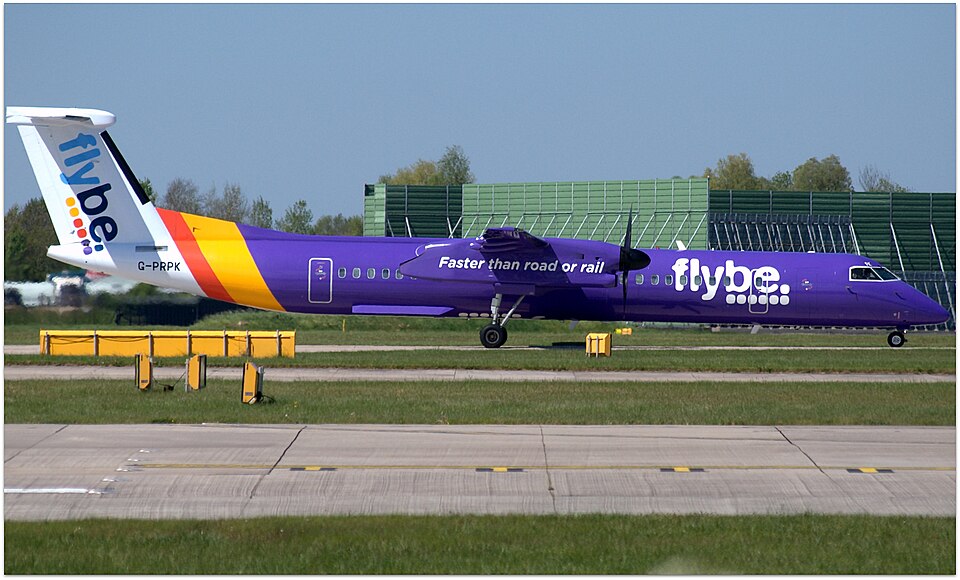
On 22 July 2019, at 0630 UTC, a DHC-8-402 Dash 8 (registration G-PRPK) was on a scheduled commercial passenger flight from Edinburgh Airport to London City Airport. While cruising at Flight Level 250 near Manchester, the cabin pressurisation warning illuminated. The flight crew checked the cabin pressurisation indications and observed a cabin altitude of 10,000 ft with no sign of further increase. No fault light was illuminated on the pressurisation control panel. The pilot flying called for the appropriate checklist, which directed determining whether the cabin altitude exceeded 10,000 ft. As the altitude was at or slightly above 10,000 ft with a slow rate of climb, an emergency descent was initiated. The crew donned oxygen masks, notified air traffic control, and obtained clearance to descend initially to FL200 and then to FL100 after declaring MAYDAY.
During the descent, at approximately FL150, the cabin pressurisation warning light extinguished, and cabin pressure indications returned to normal. The crew concluded that the pressurisation controller was still operating. The pilot monitoring informed the cabin crew of the situation. Once level at FL100, the crew decided to divert to Birmingham. The senior cabin crew member was briefed using a NITS format (Nature, Intentions, Timings, Special instructions). The cabin crew reported no injuries or passenger concerns. After descending below FL100, the crew removed their oxygen masks and cancelled the MAYDAY. The aircraft landed without further incident at Birmingham. After shutdown, the flight crew isolated the cockpit voice recorder and flight data recorder by pulling their respective circuit breakers per operator procedures.
Aircraft Examination and Return to Service
The AAIB released the aircraft for maintenance action soon after being notified. The operator assumed this included the CVR and FDR; consequently, the CVR was overwritten after the aircraft returned to service and could not be analysed. During the engineering investigation, no faults were indicated on the cabin pressure control panel, and no messages appeared on the central diagnostic system when the aircraft was pressurised in automatic and manual modes to the maximum permitted differential pressure. The aircraft was returned to service the same day and flew uneventfully from Birmingham to Edinburgh.
Subsequent Pressurisation Events
Between 23 July and 17 September 2019, over more than 260 sectors, the aircraft experienced nine additional pressurisation events. Each event prompted the commander to raise an entry in the aircraft’s technical log pages. Maintenance actions were performed after each entry. There were periods of over a week with no reported pressurisation issues. On 17 September 2019, another pressurisation event led to a second emergency descent and use of oxygen masks. The operator then withdrew the aircraft from service for an in-depth engineering investigation. After rectification work, the aircraft returned to service on 28 September 2019. As of the writing of the AAIB report, the aircraft had flown 109 sectors with no further pressurisation events.
Operator's Investigation
The operator’s internal investigation found that an Air Safety Report (ASR) had not been raised for six of the nine pressurisation events. Consequently, on 9 August 2019, the operator issued a notice (NOTAC 101/19) to all flight crew with guidance on reporting such events. However, four further events involving the aircraft (not all pressurisation-related) also lacked ASR submissions. The operator’s safety team visited all bases to reinforce the requirement to submit safety reports for all safety-related events.
Engineering Monitoring
The pressurisation events on G-PRPK between 23 July and 17 September 2019 were discussed during the operator’s daily Technical Operations review meetings. Despite this, the aircraft continued to operate until the Duty Technical Manager in Maintenance Control withdrew it from service. The recurring events were not noted in the operator’s Aircraft Maintenance and Engineering System (AMOS) maintenance database until 12 September 2019. The operator commented that its reliability department did not discuss the pressurisation issue between July and October 2019.
Safety Actions
In response to these occurrences, the operator took safety actions including issuing NOTAC 101/19 to flight crew and conducting a roadshow at all bases to encourage ASR submissions. The operator also initiated a review of its reliability programme to enable more robust monitoring of recurring defects.