Synopsis
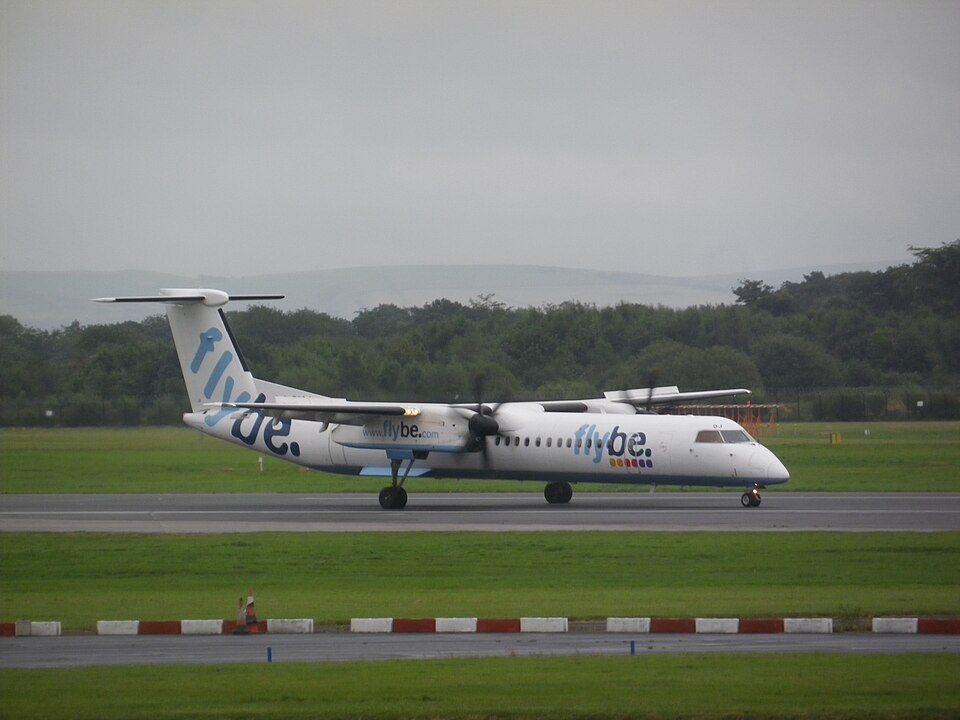
On 9 January 2017, a DHC-8-402 Dash 8 aircraft, registration G-ECOJ, was involved in a serious incident during landing at Newcastle Airport. The aircraft, operated on a scheduled commercial passenger flight from Southampton, experienced a tailstrike when the rear fuselage contacted the runway. Damage was limited to the tail strike switch/sensor fairing. One crew member sustained minor injuries; no passengers were injured.
History of the Flight
The crew consisted of a commander and co-pilot, with the co-pilot acting as the handling pilot. The co-pilot had completed type conversion in November 2016 and had flown 49 sectors as pilot flying. Weather conditions were fine with a westerly wind of 13 knots. The crew briefed for an ILS approach to Runway 25 with Flap 15 selected, consistent with the operator's policy for runways longer than 2,000 m. The landing distance available was 2,125 m.
The approach was flown with autopilot engaged. At 1,000 ft and 500 ft above aerodrome level, stable approach criteria were met. Vref was 118 kt. Autopilot was disconnected at 200 ft. At 100 ft, power was reduced from 15% to 8% torque on each engine. Over the next four seconds, speed decreased from 124 kt to 113 kt and pitch attitude increased from 3.7° to 7.6°. Sensing the aircraft sinking, the commander advised the co-pilot to increase power and at 8 ft advanced the power levers himself. The aircraft touched down and bounced, illuminating the 'TOUCHED RUNWAY' caption and a triple warning chime. The commander took control and landed on the remaining runway. The aircraft taxied to a stand; passengers disembarked. Air traffic control was notified later. Inspection revealed minor damage to the tail strike switch fairing; no structural damage was found.
Aircraft Information
The DHC-8-400 has a high wing configuration with engines mounted on the wing. Three flap settings are available for landing: 10°, 15°, and 35°. The operator recommended Flap 15 for runways of 2,000 m or more. A Flap 15 landing typically results in a touchdown attitude of 5° nose-up; tail contact occurs between 6.9° and 7.5° nose-up depending on main gear oleo compression. Standard operating procedures require the monitoring pilot to announce 'pitch five' at 5° nose-up, and if pitch reaches 6° or sink is detected, the pilot flying should announce 'correcting' and increase power or go around. Power setting directly affects lift due to propeller airflow. Operator guidance recommends maintaining 15% torque on glideslope. The operations manual warns that speed on final approach must not be below Vref except for short-term fluctuations. Specific tailstrike avoidance guidance notes that deviations from normal landing procedure are the main cause, including decreasing speed well below Vref, inappropriate power reduction, prolonging the flare, and starting the flare too high.
The aircraft is fitted with a touched runway detection system including a frangible switch on the aft fuselage. When triggered, a warning light illuminates. Quick reference handbook action is to advise ATC and airport operations. A manufacturer's service letter (DH8-400-SL-00-020) reminded operators of pitch attitude awareness and stated that descent rate control below 200 ft must be through power lever management rather than pitch adjustment.
Analysis
The approach and landing occurred in darkness, reducing peripheral visual cues for height judgment. At about 100 ft, the co-pilot reduced torque to 8%, below the recommended minimum of 15%, placing the aircraft in a low energy state with increasing descent rate and decreasing speed. To counter the sink, the co-pilot increased nose-up pitch instead of adding power—likely an instinctive reaction. The commander's verbal intervention was ineffective, and his later power lever advance was too late to prevent the tailstrike. The Dash 8-400 has a small margin between normal flare angle and tailstrike angle. Instinctive pitch increase when sink is sensed can easily lead to tail contact. Power management is critical because of its direct effect on lift. Training emphasizes using power to control descent rate, but inexperienced pilots may revert to instinctive pitch increase under pressure.
Conclusion
The tailstrike occurred due to an inappropriate reduction in power during the latter stages of the approach, leading to a reduced energy state. When the aircraft began to sink, the pilot flying instinctively increased pitch attitude instead of applying the trained response of increasing power.