History of the Flight
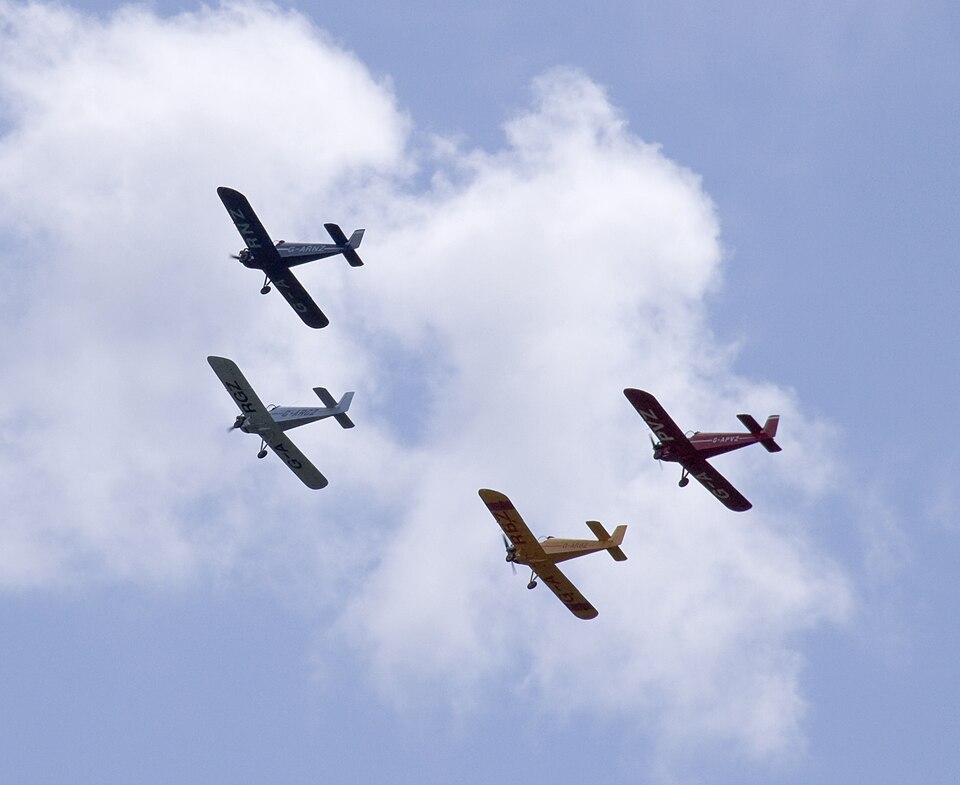
On 14 August 2016 at 1430 UTC, a Druine D.31 Turbulent, registration G-ARNZ, was participating in the Herne Bay Air Show as part of a three-aircraft team. The display routine included a 'balloon bursting' segment. A ground crew member in a small boat released balloons, which the aircraft were to burst by flying into them. The pilot of G-ARNZ missed a balloon on his first pass but struck one 'dead centre' with the propeller on his second attempt. Continuing around the race-track pattern, the pilot noticed engine power 'much reduced' while on the downwind leg. He checked instruments and controls—ignition, throttle, carburettor heat, and fuel—but found no anomalies. The engine continued running at low power as the aircraft descended from about 500 ft asl.
Unable to glide to open land inland, the pilot headed east towards an area off the beach beyond the display zone, where fewer people were present. He flew at approximately 60 KIAS, intending to stall the aircraft tail-first onto the water to remain upright. However, the mainwheels touched first, causing the aircraft to pitch forward rapidly onto its back. The pilot released his straps but was trapped upside down with his head near the sea bed. His automatic lifejacket had inflated, pressing him into the cockpit. Two members of the public righted the aircraft, and the pilot—submerged for about 20 seconds—was helped out with a minor cut to his face but otherwise unharmed and conscious.
Engineering Examination
The aircraft was recovered intact but with damage to the wing leading edge (undetermined whether from ditching or rescue). Detailed engine examination revealed a piece of balloon approximately 50 mm in diameter lodged in the carburettor air path, restricting airflow. No filters were fitted to the cold or hot air intakes.
Survivability
The pilot wore a 150 Newton automatic lifejacket designed for boats, which inflated as designed in the water. CAA Safety Sense Leaflet 21d ('Ditching') advises that automatically inflated lifejackets activated by a soluble tablet are unsuitable for aviation as they can hinder escape in a water-filled cabin.
Safety Action
The aircraft operator developed a modification to fit a screen to the carburettor intake to prevent ingress of similar debris. If blocked, alternative hot air supply still allows engine operation. The modification was approved by the Light Aircraft Association after testing.
Conclusion
During the balloon bursting element of a flying display, the engine lost power due to a balloon fragment blocking the carburettor. The pilot ditched in shallow water; the aircraft inverted and the pilot was trapped by his inflated lifejacket until rescued.