History of the Flight
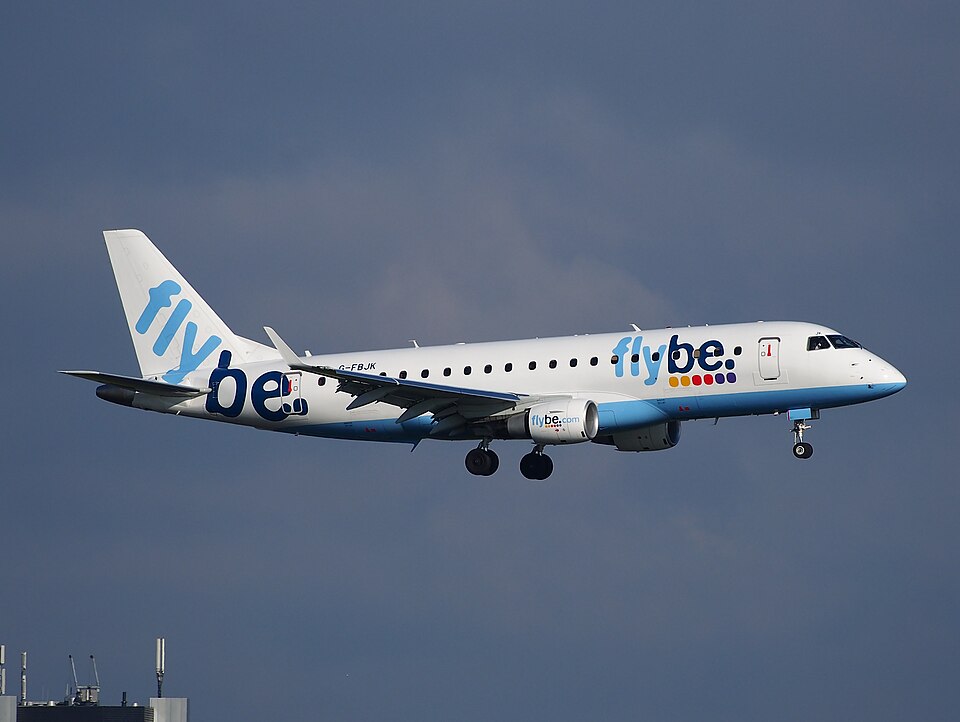
The aircraft, an Embraer 175 registered G-FBJK, was scheduled to fly from Dublin Airport to Cardiff Airport as the second of four sectors for the crew. During turnaround, the pilots initially set up for Runway 28. The co-pilot, who was the pilot flying, calculated takeoff performance using an estimated weight and the EFB, specifying flap 1. After receiving departure clearance for Runway 10, the co-pilot recalculated performance for Intersection Echo 7 (E7) but inadvertently selected E7 TMP, which specified flap 4. The EFB was passed to the commander for cross-checking, but a discrepancy in the loading information distracted him. Neither pilot noticed the incorrect flap setting or the TMP suffix. The data was entered into the FMS, and the aircraft commenced takeoff from Runway 10 with flap 1 selected but using takeoff speeds for flap 4.
Recorded Information
Flight data monitoring showed the aircraft rotated at 133 kt, 12 kt below the correct VR for flap 1 (145 kt). The rotation stopped at about 10° pitch with the landing gear still on the runway. Five seconds later, the IAS reached 145 kt, and the aircraft became airborne.
Pilots' Comments
The commander noted that flap 1 was typically used at Dublin and that the EFB's uniform font size and style made it difficult to distinguish critical data. He also remarked that fatigue from consecutive early starts may have been a contributory factor. The co-pilot stated that the turnaround was busy, and she felt rushed, leading her to overlook the "TMP" suffix.
Cross-Checking Procedures
The operator's operations manual required both crew members to confirm the EFB performance calculation and for the captain to conduct a gross error check using the QRH. EASA regulations recommend independent calculations by each pilot before cross-checking, but the operator did not mandate this at the time.
Analysis
The serious incident was caused by an ineffective SOP and non-adherence to a SOP. The commander's cross-check was ineffective, likely due to distraction from the loading discrepancy and the EFB's lack of contrast. The pilots did not perform a gross error check as required, and the co-pilot did not mention the intersection used in her brief. Independent calculations, as recommended by EASA, might have caught the error.
Safety Actions
The operator revised its SOPs to require independent performance calculations by both pilots before cross-checking, aligning with EASA regulations. It also introduced a takeoff and landing data card for the Embraer 175 fleet. Additionally, the operator is considering changing the EFB's font, format, or colour to make calculated data stand out more clearly.