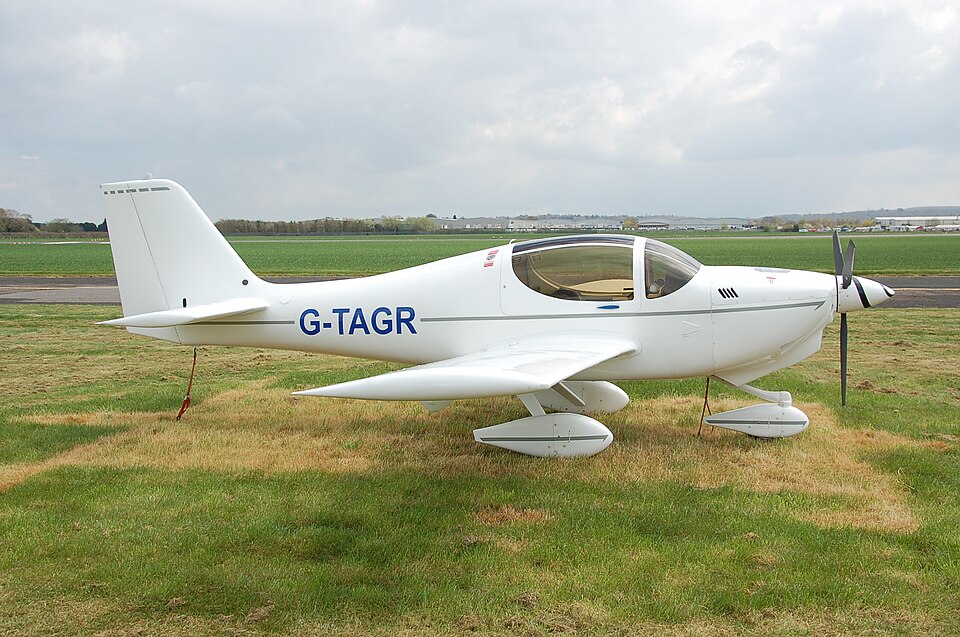
Accident Overview
On 1 July 2015 at approximately 1120 UTC, a Europa aircraft, registration G-TAGR, with a single Rotax 912 ULS piston engine, was involved in an accident while attempting to land at Bolt Head Airfield in Devon. The flight was private, with one crew member (the pilot) and no passengers. The pilot held a Private Pilot’s Licence and was 73 years old, with a total flying experience of 1,126 hours, including 118 hours on the Europa type.
Sequence of Events
According to the pilot's report, G-TAGR arrived from the north in loose formation with two other aircraft, intending to land on grass Runway 11. As the pilot turned right downwind, he observed a long strip of pale brown vegetation, which he took to be the runway. He made his approach to this strip and only realized his mistake as he flared and the wheels sank into what was actually a crop of barley growing to the right of the grass runway. The aircraft slowed rapidly, yawed through 180°, and came to a halt after approximately 18 meters.
Aircraft Damage
As a result of the landing in the barley crop, the aircraft sustained damage including cracked tail and rear fuselage, and damage to the left wing and aileron. The pilot reported no injuries to himself.
Pilot's Comments
In his report, the pilot stated that the accident was caused by the complete absence of runway markings at Bolt Head Airfield and the fact that no mention was made of the crops on both sides of the runway when he telephoned the airfield operator for permission to land. He noted that the potentially deceptive nature of the airfield layout was not mentioned during that call.
Airfield Information
Figure 1 in the AAIB report shows a view looking along Runway 11, depicting a barley crop growing along its southern edge, with more barley and a green corn field to the north. The report notes that contrast and colors vary with the ripeness of the crops at different times of the year. The Pooleys Flight Guide chart for Bolt Head correctly reflected the runway, but the airfield website was subsequently updated with a cautionary notice warning pilots that the strip of crops to the south of the runway can be deceptive and may appear to be the runway. The notice advises inbound pilots to positively identify the runway and land on the mown grass, not on the crops.
Similar Incidents
The AAIB report mentions another accident nearly two weeks earlier involving an Auster J5F Aiglet (G-AMZT) that landed in the same barley crop after mistaking it for the reciprocal Runway 29.