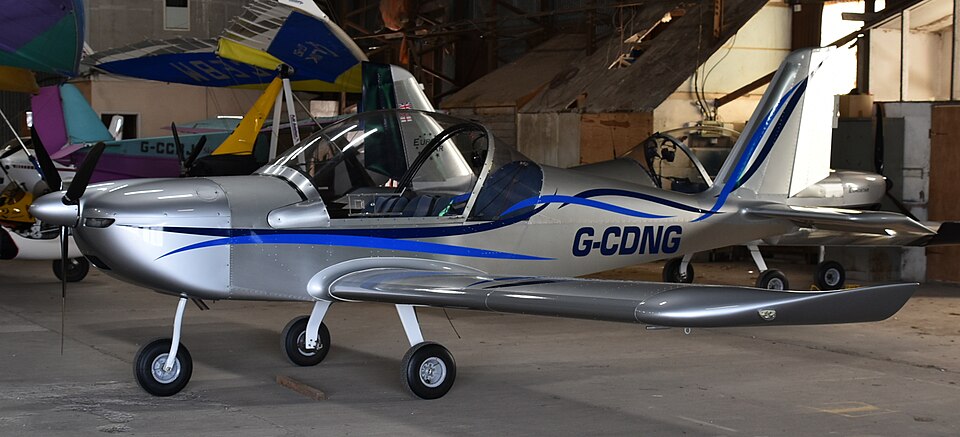
Aircraft and Flight Details
The aircraft involved was an EV-97 Teameurostar UK Eurostar, registration G-CDNG, powered by a single Rotax 912-UL piston engine. It was manufactured in 2005. The flight was a private trip from Shobdon Airfield to Cotswold Airport, Gloucestershire, with only the pilot on board. The pilot, aged 71, held a National Private Pilot’s Licence and had 138 flying hours, of which 122 were on type.
Accident Sequence
The aircraft departed Shobdon at approximately 1200 hrs and arrived at Cotswold Airport, an airfield unfamiliar to the pilot. Conditions were clear but gusty. During the landing on Runway 08, the pilot flared too early and continued with pitch-up input, which led to a stall and a heavy landing. The pilot reported misjudging the flare and noted possible factors including a strong gusting headwind and an upslope on the unfamiliar runway.
A cockpit video recording showed airspeeds of approximately 60 mph during the approach, 43 mph in the flare, and 30 mph after the stall at touchdown. The video indicated that no additional margin was added to the approach and landing speeds to account for the gusting conditions, although it was not conclusive that this was causal.
Environmental Conditions
The METAR for RAF Fairford, 18 km east, about 10 minutes before the accident, reported wind from 80° at 14 knots gusting 22 knots, creating a gusty headwind for Runway 08.
Damage and Injuries
The heavy landing caused deformation of the right landing gear, damage to its fixing points, and penetration of the fuselage floor. The damage did not prevent the aircraft from taxiing off the runway. No injuries were sustained by the pilot.
CAA Safety Sense Leaflet 1e provides guidance on speed control in gusty conditions and on optical illusions at unfamiliar aerodromes with wide runways.