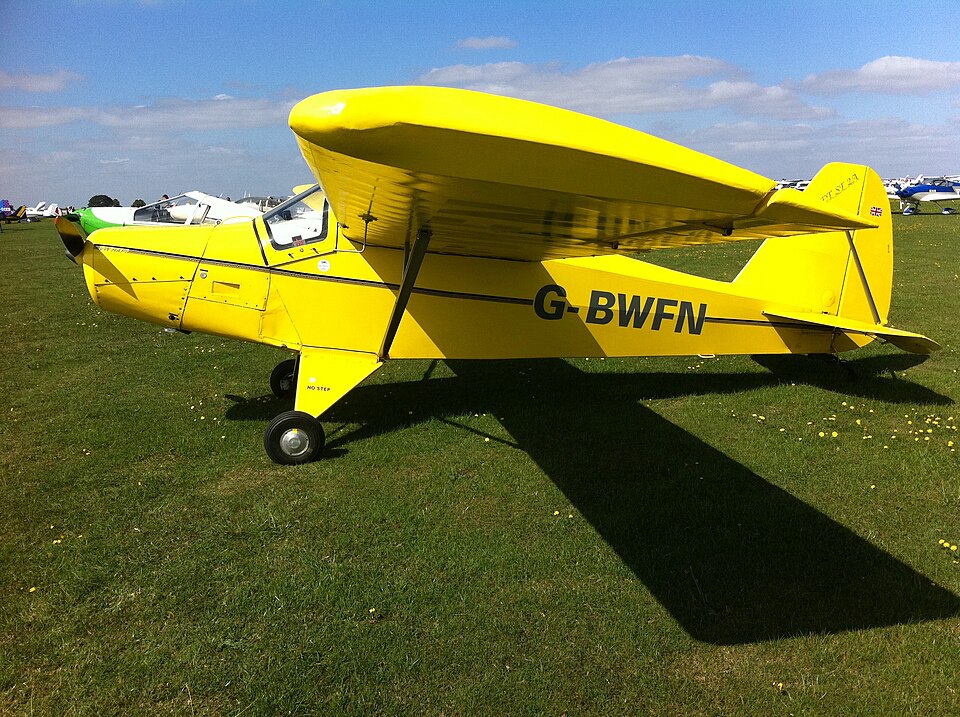
Accident
On 3 July 2014 at 1214 hrs, a HAPI Cygnet SF-2A (registration G-BWFN) experienced a loss of engine power during the initial climb after takeoff from Runway 23 at Abbots Bromley Airfield, near Blithfield Reservoir, Staffordshire. The pilot executed a forced landing into a field, where the landing gear collapsed upon touchdown. The two occupants sustained minor injuries and exited the aircraft unassisted. The aircraft sustained damage to the propeller, cowling, landing gear, lower fuselage, and right wing.
History of the Flight
The aircraft, based at Abbots Bromley Airfield (elevation 410 ft, grass strip 680 m by 22 m, orientation 23/05), was on a private local flight with one pilot and one passenger. The pilot reported fine weather: no cloud below 3,000 ft, good visibility, temperature 27°C, and surface wind from 250° at 8 kt. After warming the engine to normal operating temperatures and performing pre-flight checks, takeoff and initial climb were normal. At about 450 ft aal, the engine began “popping” and lost power. The pilot lowered the nose, set trim, confirmed fuel on, applied carburettor heat, and selected the backup electronic ignition, but engine operation did not improve. Given low altitude, the pilot focused on forced landing. The propeller stopped completely during descent. The aircraft felt different without engine power, with increased drag, sluggish controls, and altered response during the final turn. Touchdown was at slow speed, but the landing gear collapsed and the right wing contacted the ground, stopping the aircraft quickly.
Investigation
After the accident, the pilot and a Light Aircraft Association inspector examined the engine. No faults were found in the electrical or fuel systems. They concluded that the most likely reason for the power loss was carburettor icing. At 1120 hrs UTC, the METAR at East Midlands Airport (20 nm east) indicated 21°C and dewpoint 14°C, suggesting a moderate risk of carburettor icing at cruise power. Factors possibly contributing included time spent at idle power on grass before takeoff and local humidity. The pilot noted that a temperature gauge may have misled due to the aircraft being parked in the sun. The pilot considered that full four-point harnesses reduced injury potential, despite one strap slipping.