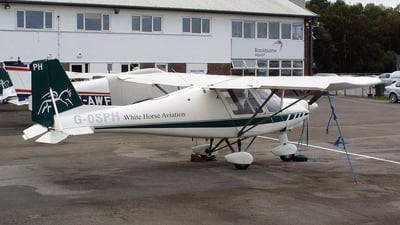
Accident Overview
On 1 December 2020 at 1330 UTC, an Ikarus C42 FB100 Bravo (registration G-OSPH) sustained landing gear collapse during landing at Chilbolton Airfield, Stockbridge, Hampshire. The aircraft was on a private flight from Blackbushe to Chilbolton. The sole pilot and one passenger were uninjured.
Aircraft and Pilot Details
The Ikarus C42 FB100 Bravo, serial number 1205-7202, was manufactured in 2012 and powered by a single Rotax 912ULS piston engine. The pilot held a National Private Pilot’s Licence, was 42 years old, and had 127 total flying hours (60 on type). His recent flying experience included 23 hours in the last 90 days and 7 hours in the last 28 days.
Circumstances of the Flight
The pilot normally flew the aircraft from the left seat, but on this occasion he occupied the right seat. He reported that an experienced passenger, who had also been his instructor, was sitting in the left seat, and the pilot “elected to fly” as the aircraft commander from the right seat. The aircraft’s primary flight controls consist of a center-mounted control column and throttle levers between the pilot’s legs.
During the landing, at approximately 5 to 10 feet above ground level, the pilot felt the aircraft descending more rapidly than intended. Instead of applying throttle to correct the descent rate, he instinctively pushed the control column forward. This resulted in a hard landing that caused the landing gear to collapse.
Pilot’s Identified Factors
The pilot attributed the accident to several factors:
- Having a more experienced pilot (his former instructor) beside him, combined with his familiarity with the aircraft and destination, led him to view the flight as routine. He had not identified the risks associated with flying from the right seat.
- His normal seating position (left seat) involved operating the control column with his right hand and the throttle with his left. When flying from the right seat, his hand positions were transposed. During the landing, his automatic subconscious response moved his left hand forward on the control column rather than the throttle.
- The aircraft’s proximity to the ground left insufficient time to correct the error.
AAIB Comment
The AAIB noted that the accident illustrates how a seemingly minor change can affect a routine flight. All flying requires complex sets of processes and procedures. Training and practice introduce automatic corrective responses to dynamic flight conditions. When a change alters the validity of those automatic responses, pilots should assess the associated risk and consider mitigations.