Introduction
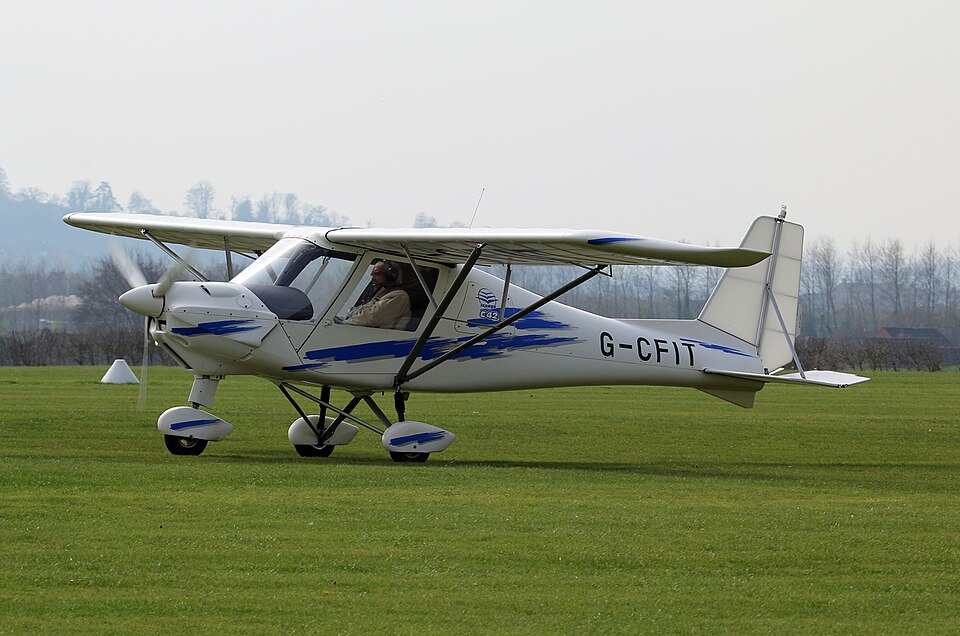
On 23 March 2016, at 1155 hours UTC, a Ikarus C42 FB100 microlight aircraft, registration G-CFIT, was involved in an accident during landing at Clench Common Airfield, Wiltshire. The aircraft was operated on a private flight with one pilot and one passenger on board.
Aircraft and Pilot Information
The aircraft, serial number 0804-6966, was manufactured in 2008 and powered by a single Rotax 912ULS piston engine. The pilot, aged 61, held a Private Pilot’s Licence (Microlight) and had accumulated 205 flying hours, of which 90 were on type. In the previous 90 days he had flown 8 hours, with 4 hours in the last 28 days.
Accident Narrative
According to the pilot’s report, during the approach to Runway 08 the aircraft was faster than intended. The pilot landed long on the slightly down-sloping, damp grass surface and recognised that it was unlikely to stop on the runway. He assessed that there was insufficient space to take off again and safely clear trees in the next field. The aircraft was unable to stop before overrunning the runway onto a ploughed area. During the overrun, the nose landing gear collapsed, causing damage to the propeller and possible damage to the right wing.
Damage and Injuries
The nose landing gear collapsed, the propeller was damaged, and the right wing may have sustained damage. Both the pilot and passenger were uninjured.
Additional Information
The AAIB notes that CAA Safety Sense Leaflet 12, titled ‘Strip Flying’, offers advice for operating from unlicensed aerodromes and private strips.