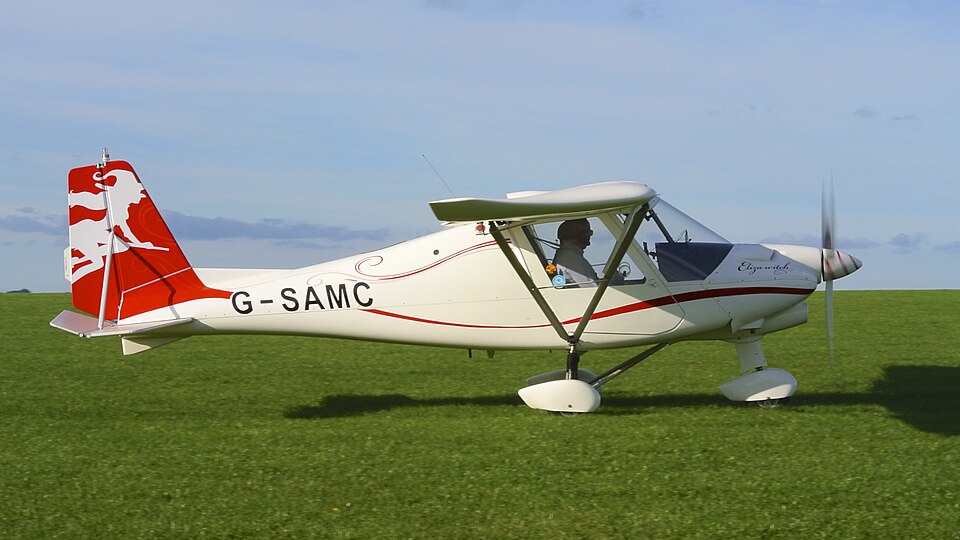
Aircraft and Pilot Details
The aircraft involved was an Ikarus C42 FB80 Bravo, registration G-SAMC, manufactured in 2012 (serial no. 1207-7213) and powered by one Rotax 912-UL piston engine. The flight was a private journey with one pilot and one passenger. The pilot, aged 53, held a National Private Pilot’s Licence and had accumulated 68 hours of flying experience (all on type), with 14 hours in the last 90 days and 6 hours in the last 28 days. Neither occupant sustained injuries.
Accident Sequence
On 25 August 2018 at 1140 UTC, the pilot was landing at Compton Abbas Airfield, Dorset, after departing from Membury Airfield. The pilot had recently obtained her NPPL (A) licence and had 19 hours as pilot-in-command on the Ikarus C42. This was her first landing as handling pilot at Compton Abbas, although she had visited as a passenger; it was also the passenger’s first flight in a light aircraft.
The pilot joined the microlight circuit to land on Runway 26. Due to high activity and difficulty spotting conflicting traffic, she flew a dead-side repositioning after being too high on the base-to-final turn. During a second circuit, she extended her downwind leg after observing another aircraft landing. She was on final approach at about 300 ft when the preceding aircraft cleared the runway.
The radio operator reported the wind as “north-west 10 kt.” The pilot later stated she did not correctly translate the wind direction to a compass heading, underestimating the crosswind strength. She configured two stages of flaps and prepared for what she believed was a light crosswind.
The aircraft touched down shortly after the runway threshold but lifted off again, then bounced a second time. The pilot applied a small amount of power to control a third touchdown, but the right wing began lifting. She applied full right rudder and full power to go around, but airspeed was very low, and the aircraft descended heavily onto the runway. The nose landing gear leg broke, and the aircraft slewed left, stopping short of parked aircraft. Damage occurred to the nose leg, propeller, main landing gear, and left wing.
Contributing Factors
The pilot reported her workload was very high. The official analysis noted that the pilot was relatively inexperienced and faced multiple task-related factors: the airfield operated two circuit patterns, the circuit was busy, the wind information required a mental computation she was unused to, and the aircraft was part-way down final approach before the preceding aircraft cleared. These factors cumulatively affected her performance, resulting in difficulty identifying traffic positions, miscalculation of the crosswind, multiple bounces, and a late decision to go around.