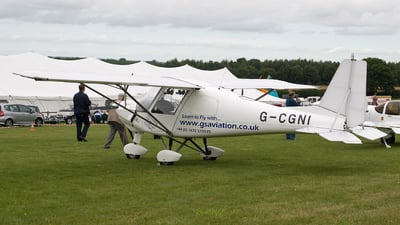
Accident Overview
On 9 May 2025 at 1240 UTC, an Ikarus C42 FB80 (registration G-CGNI, serial number 1005-7108, year of manufacture 2010, powered by one Rotax 912 piston engine) was conducting a private flight from Yatesbury Airfield, Wiltshire. The sole occupant, the pilot, held a National Private Pilot’s Licence and had 6,103 hours total flying experience, with 5,500 hours on type. No passengers were on board. The aircraft sustained wing and airframe damage, and the crew reported no injuries.
Sequence of Events
As the aircraft accelerated for takeoff, the pilot realized that the right wing was lifting about its two upper attachment points. He stopped the aircraft on the runway. The structural damage resulted from the movement of the wing. This would have been the first flight after the right wing was refitted following repair.
Examination Findings
Investigation revealed that although the wing lower strut attachment pin was engaged through the aircraft attachment, the wing strut fitting had not been engaged correctly, and the pin did not pass through it. Consequently, the inboard end of the lower strut was not attached to the aircraft fuselage. As the aircraft accelerated and the wing began to produce lift, it rotated about the upper attachments.
Maintenance and Rigging
The wing rigging procedure in the aircraft maintenance manual includes a final check to ‘lift the wing at the wing tip to ensure proper attachment…’. The pilot stated he was familiar with the installation and reported that the wing was fitted at the end of a long day. He believed it was correctly attached but did not recall attempting to lift the wingtip to ensure it was secure.
A British Microlight Aircraft Association (BMAA) Inspector had been asked to check a minor sail/fabric patch repair, which was performed, but this did not include checking the rigging, as the wing was already installed on the airframe.
Similar Occurrence
The AAIB reported on a similar occurrence in 2013 where the wing of another Ikarus C42 lifted during the takeoff roll and the pilot stopped before the aircraft became airborne.
Safety Considerations
The UK type-approval holder considers the design and installation instructions to be adequate. The LAA published an article entitled ‘C42 Mis-rigging’ in the October 2025 edition of Light Aviation magazine. The BMAA plans to highlight the issue in a direct communication to C42 aircraft owners.