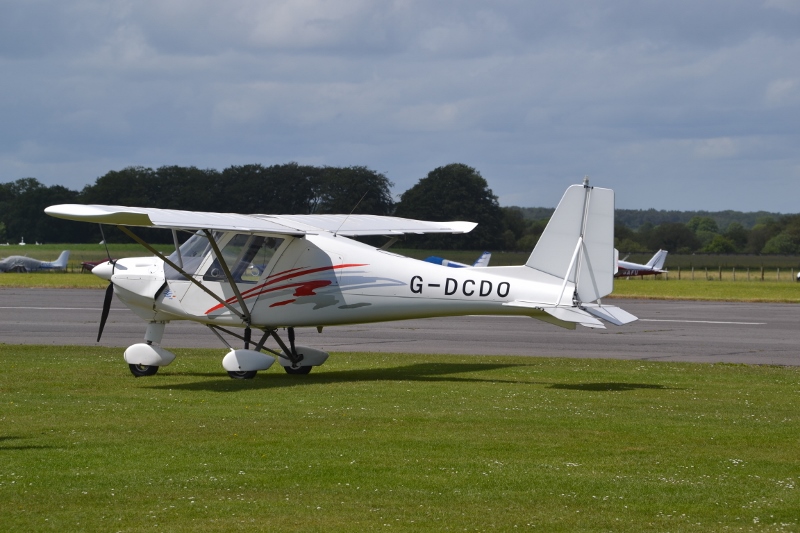
History of the Flight
The pilot, returning from Land's End to Old Sarum, decided to land at Dunkeswell Airfield to refuel. He initiated an approach to Runway 17. During base leg and turning finals, he focused on the start of the tarmac surface. However, on final approach he realized the actual runway threshold was considerably displaced, with roughly the first half of the runway disused. Still having distance to cover before reaching the correct threshold, he applied power to reduce the rate of descent. This made the glidepath much shallower, and the pilot believes it led him to flare too high. The aircraft stalled, and he attempted recovery by pushing forward on the control column to lower the nose, but the aircraft struck the ground heavily and bounced back into the air. The pilot then applied power to catch the bounce and executed a go-around, followed by a second successful landing.
Damage
The front tyre burst, and the nosewheel fork and nose gear mountings were damaged. The pilot suspects the nosewheel tyre deflated during the first landing attempt and that further damage may have occurred during the second landing.
Pilot Information
The commander, aged 59, held a Private Pilot's Licence and had 154 hours total flying experience, of which 38 hours were on type. His flying in the last 90 days totaled 20 hours, all within the last 28 days. He was aware of time pressures to refuel and return to Old Sarum, which he believes led to a hurried approach and landing. He regretted instinctively lowering the nose in response to the impending stall rather than applying power to go around as soon as he recognized the high flare. He noted that he had had an opportunity to observe the displaced threshold on Runway 17 when stopping at Dunkeswell earlier that day.
Conclusion
The aircraft sustained a burst front tyre and damage to the nosewheel fork and nose gear mountings as a result of a heavy landing and bounce. No injuries were reported.