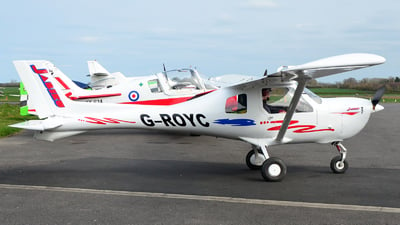
Accident Details
On 27 October 2019 at 1421 UTC, a Jabiru UL-450, registration G-ROYC, was involved in a ground collision with a stationary SZD-51 glider (G-CHEK) at Gransden Lodge Airfield in Cambridgeshire. The aircraft was engaged in a private flight with two pilots on board: the commander (left seat) had 267 hours total, 28 on type; the right-seat pilot had not flown the type before. During the final approach, the right-seat pilot assessed the approach as unstable and initiated a go-around at low altitude. During the go-around, the aircraft descended and drifted left, colliding with the tail of the glider. One occupant of G-ROYC sustained a minor injury; the glider pilot was uninjured. The aircraft sustained substantial damage.
History of the Flight
The flight originated from Old Warden Airfield earlier that morning. After several local flights with Scout group members, a second pilot requested to fly G-ROYC. The commander agreed and briefed him. The right-seat pilot operated the controls while the left-seat pilot followed through, considering himself pilot in command. They flew for about 15 minutes, then returned to the airfield. While joining the circuit, they extended downwind behind another aircraft. On approach, the right-seat pilot started with one stage of flap. The flap selector was on the far left, so the left-seat pilot operated it. At the commander's suggestion, full flap was selected, increasing the descent rate. The right-seat pilot then decided to go around. He attempted full power but initially closed the throttle, then corrected. The left-seat pilot moved the flap switch to retract but left it latched, causing the flaps to fully retract. The right-seat pilot noted a pitch-up and minimal control effectiveness, unable to stop the sink and left drift. The aircraft struck the glider on the left side of the runway.
Aircraft Examination
The AAIB did not examine G-ROYC in detail, but both pilots reported normal engine behavior. Post-accident photographs showed flaps retracted, flap switch in the up position, and carburettor heat pulled. The aircraft's weight was calculated at 463.5 kg, exceeding the maximum permitted gross weight of 450 kg. The fuel load was 32 litres, significantly above the maximum fuel load for two 86-kg crew (16 litres).
Investigation Findings
The investigation determined that the aircraft likely failed to climb due to a combination of inadvertent full retraction of the flaps, a brief delay in applying full power, and the aircraft being slightly above the maximum takeoff weight. The LAA provides a Pilot Coaching Scheme to assist pilots learning new types. The BGA and gliding club have taken safety actions to minimize ground collision risks.