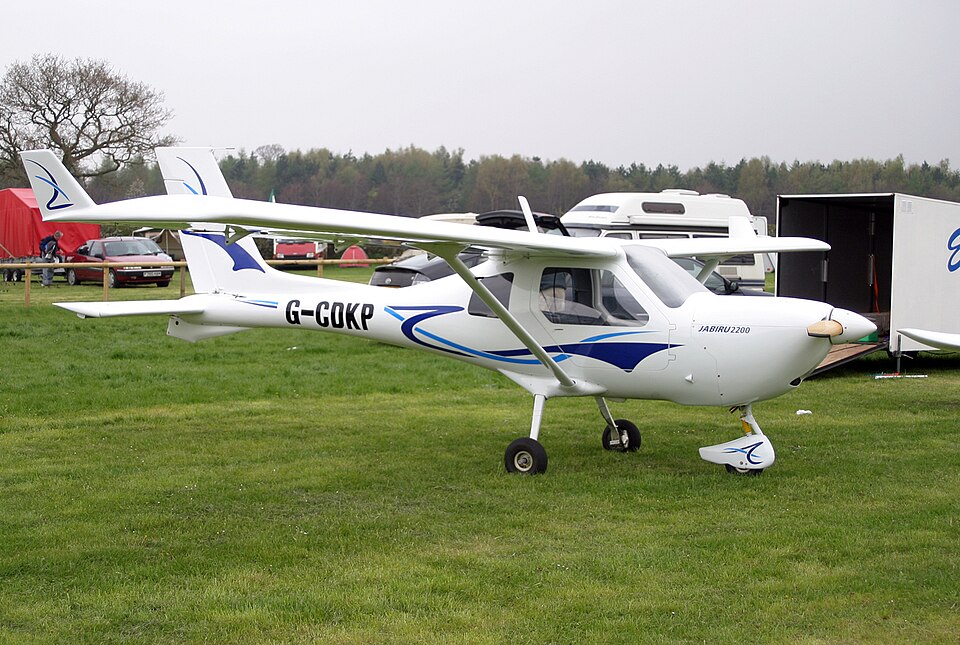
Accident
On 25 June 2016 at 1100 UTC, a Jabiru UL-D (registration G-CDKP) was on a training flight at Damyn's Hall Aerodrome, Essex. The flight was conducted with an instructor and a student on board. The weather was described by the instructor as good with "mild turbulence" and showers. Runway 21, a grass surface approximately 650 m long, was in use. At the southern end, a ditch had been filled in to provide an additional 150 m of overrun into an adjacent field.
After departure, the aircraft encountered heavy rain, prompting the instructor to terminate the flight. On final approach, more heavy rain was experienced, and the aircraft landed "long". The instructor reported that the aircraft rolled for some distance before he applied the brakes, and that it then aquaplaned. He attempted to turn the aircraft to avoid impact with the hedge at the end of the runway.
A witness assessed the ground marks left by the aircraft and determined that touchdown appeared to have occurred 70 m before the runway end, with 220 m of grass surface (including the overrun area) available. The aircraft appeared to have travelled the final 50 m moving sideways. The aircraft manufacturer stated that the landing distance required over a 15 m obstacle is 168 m.
The aircraft sustained damage to the right wing, right side of the fuselage, nose landing gear, and propeller. There were no injuries to the crew.