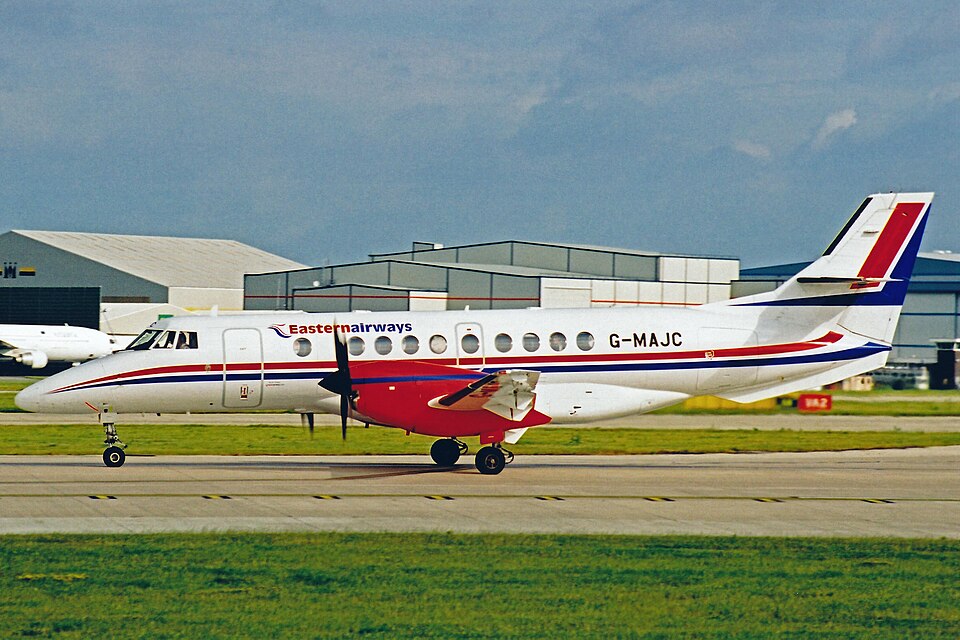
History of the Flight
On 16 October 2017, a Jetstream 4100 (G-MAJC) operated a commercial passenger flight from Bristol International Airport to Hawarden Airport. The crew had reported for duty at 0600 hrs at Leeds Bradford Airport, where they were reassigned due to a technical issue with another aircraft. After a pre-flight inspection revealed a low standby battery charge, an engineer assisted and advised that connecting ground power would recharge it. The commander later reported feeling rushed and not having time to brief the cabin crew member.
The co-pilot flew the sector to Bristol, which was uneventful. After landing, no ground power unit was available, and the aircraft departed at 0800 hrs, approximately 30 minutes behind schedule, with the commander as pilot flying.
Descent and Smoke Fumes
During descent through FL150 south of Hawarden, the crew noticed a burning smell emanating from the flight deck air vents. They donned oxygen masks and attempted to communicate, but high noise levels from cockpit speakers and feedback from the masks hindered internal and external communications. The co-pilot declared a MAYDAY, stating the burning smell and intention to land at Hawarden.
The commander contacted the cabin crew member via interphone, but she could barely hear; she later entered the flight deck, where the commander gave an emergency briefing using the NITS mnemonic (Nature, Intentions, Time, Special instructions), advising the aircraft would land in 10 minutes and to await further instructions.
Landing and Emergency Evacuation
The aircraft landed uneventfully on Runway 22 and taxied clear onto Taxiway D, where it was stopped. Uncertain of cabin conditions and communication with the cabin crew, the commander decided to evacuate. He shut down the engines and made a PA announcement to evacuate. However, the engines continued at idle power for 8 seconds before winding down, and propellers turned for another 40 seconds.
Passengers opened the forward cabin door and both mid-cabin overwing emergency exits. The right overwing exit door was dropped to the ground and blown into the still-rotating right propeller, causing damage to both. The aft cabin exit door, opened by the cabin crew member, fell to the ground and was blown rearwards by propeller wash. All passengers exited within 49 seconds, and all crew left the aircraft within 73 seconds. One passenger sustained a minor injury. RFFS attended and assisted.
Meteorological Conditions
The burning smell was attributed to smoke and dust carried from North Africa and Iberia, due to a meteorological event involving dust from the Sahara and smoke from forest fires in Iberia, transported by strong southerly winds associated with ex-hurricane Ophelia. The Met Office had forecast these aerosols for 0900 hrs on 16 October.
Communication and Operational Issues
CVR recording revealed that both pilots wore oxygen masks with interphones selected, causing high noise levels from breathing and a feedback whistle when the commander adjusted his mask or attempted transmissions. The aircraft's audio system design activated cockpit speakers when the mask microphone was selected, and they could not be turned off, contributing to communication difficulties.
The operator's Emergency Evacuation Checklist recommended that engines be shut down before evacuation. In this event, the commander used the engine stop buttons instead of moving condition levers to feather/fuel shutoff, leading to delayed propeller stoppage.
Aftermath
The aircraft was examined at the operator's maintenance facility, revealing damage to the right overwing emergency exit door and propeller, as well as the right rear emergency exit door from contact with the taxiway. The operator and other agencies took safety action regarding procedures and information dissemination in unusual meteorological circumstances.
Numerous similar smoke/fume events were reported across UK airspace on 16-17 October 2017, with over 60 Mandatory Occurrence Reports and 32 notifications to the AAIB. Many flight crews reported communication difficulties with oxygen masks.