History of the Flight
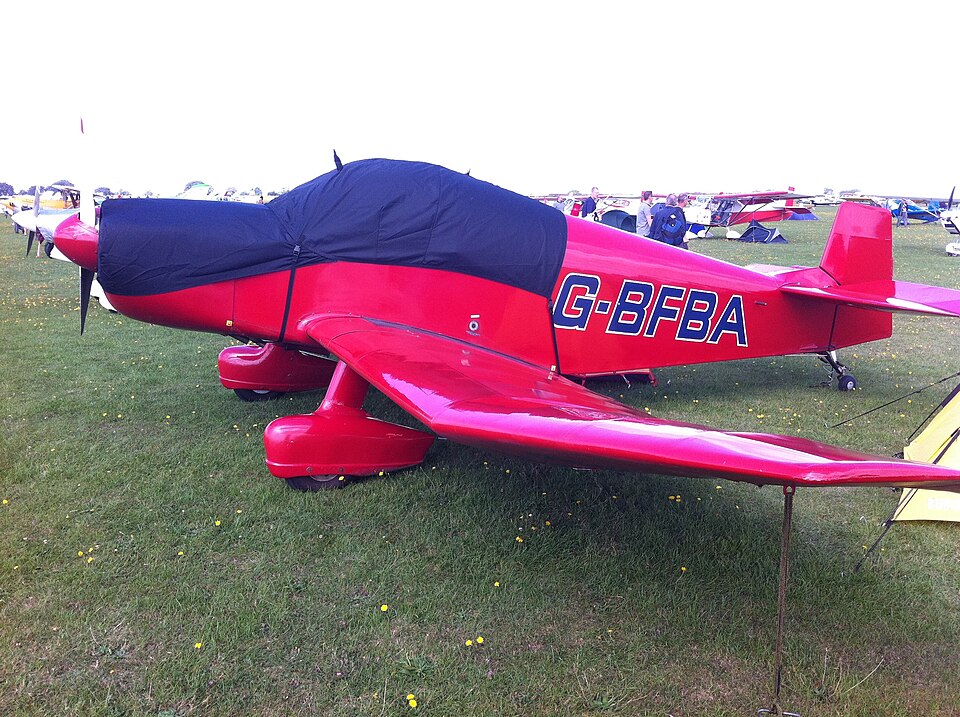
On 23 January 2017, at 1600 hrs, a Jodel DR100A Ambassadeur (registration G-BFBA) was conducting a tailwheel familiarisation flight at Dunkeswell Aerodrome, Devon. The pilot, who held a Light Aircraft Pilot's Licence (LAPL(A)), was accompanied by an LAA inspector. The handling pilot had no previous experience with tailwheel aircraft and had recently purchased the aircraft. This was his third familiarisation flight with the inspector; during the previous flights, circuits were flown from the left seat.
During the seventh touch-and-go landing, while power was applied during the landing/takeoff roll, the handling pilot lost control. The aircraft ground looped on the paved runway, causing the landing gear to collapse and the propeller to strike the ground. The aircraft came to a stop. Neither the pilot nor the passenger sustained injuries.
Regulatory Context
Both pilots held EASA LAPL(A) licences. Under UK Air Navigation Order 2016 Article 150, non-UK flight crew licences are valid for non-EASA (Annex II) aircraft like the Jodel DR100A. EASA Part-FCL requires differences or familiarisation training before a pilot can exercise privileges on a variant different from that used in the skill test. The CAA publication CAP 1535 (The Skyway Code) states that differences training requires practical training on the aircraft, while familiarisation may only involve theoretical knowledge.
The handling pilot had not undergone differences training with an instructor; the inspector was not an instructor and could not provide instruction. The handling pilot was under the impression that the inspector would be pilot-in-command (PIC), but as PIC without instructor privileges, the inspector could not log the flights as training.
Conclusion
The handling pilot lacked previous tailwheel experience, and the accident occurred during familiarisation training that was not conducted with an instructor. This highlights the requirement for appropriate training with an instructor when converting to a different aircraft variant.