Incident Summary
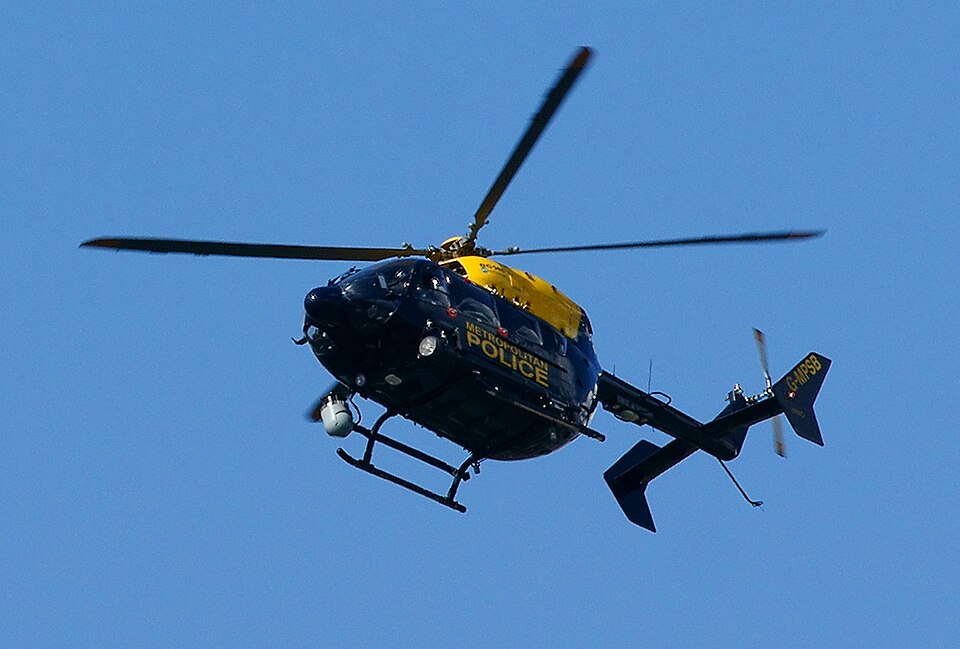
On 12 March 2021, at approximately 1150 UTC, an MBB-BK 117 C-2 helicopter, registration G-MPSB, experienced a firm landing while demonstrating a Category A (Cat A) Clear Heliport takeoff procedure with a simulated engine failure after the takeoff decision point. The landing did not meet the manufacturer's definition of a 'hard' landing, but resulted in damage to the aircraft's skid assembly.
Investigation Findings
The engine failure was simulated by the commander reducing Engine No 1's throttle to idle. Shortly after, the commander increased the throttle setting, but Engine No 1 did not respond. During attempts to resolve the issue, the throttle setting for Engine No 2 was inadvertently reduced, resulting in insufficient power for continued safe flight. The investigation determined that Engine No 1 probably did not respond because the rotor rpm droop compensation had been inadvertently trimmed in the wrong direction.
An alternative means of demonstrating the procedure was available using a manufacturer's one engine inoperative (OEI) training device that employs collars to restrict throttle movement. The manufacturer explicitly required the use of this device for Cat A OEI training at maximum training gross mass (MTGM). However, the operator had prohibited its use due to previous overtorque events.
The investigation also noted that the event might have been avoided by using a different throttle handling technique when simulating the engine failure.
Safety Recommendations
The helicopter manufacturer, Airbus Helicopters Deutschland GmbH, stated its intention to take two safety actions: develop formal guidance for pilots on simulating OEI training in the helicopter using the one engine at idle technique, and review the appropriateness and scope of the rotorcraft flight manual (RFM) limitation requiring the use of the manufacturer's training device during OEI training at MTGM. As of the publication of this bulletin, these actions had not been taken. Consequently, the AAIB issued Safety Recommendations 2024-002 and 2024-003, urging the manufacturer to proceed with these actions.