Aircraft and Flight Details
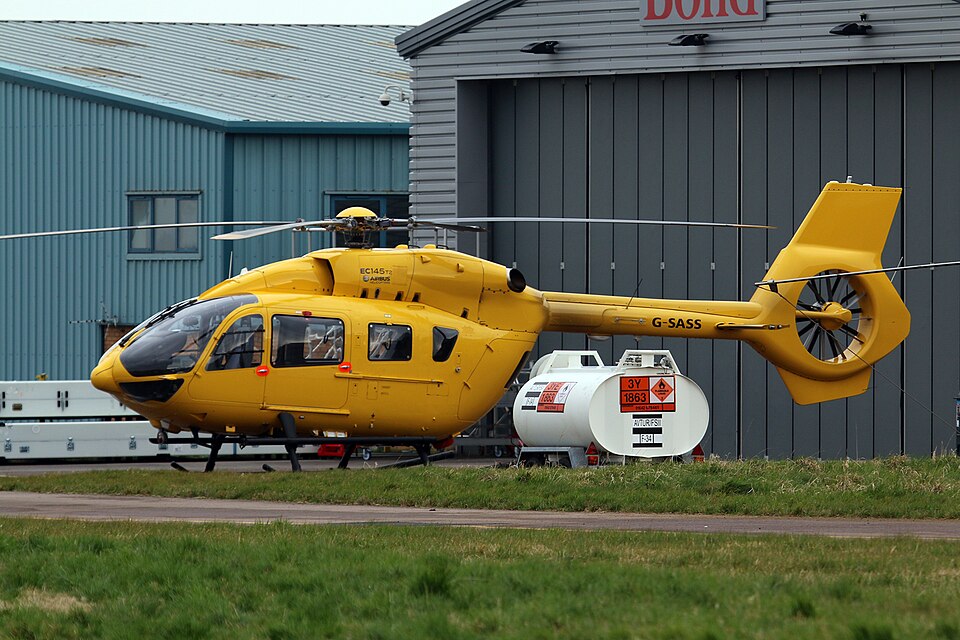
The incident involved a MBB-BK 117 D-2 helicopter, registration G-SASS, serial number 20022, manufactured in 2014. It was powered by two Turbomeca Arriel 2E turboshaft engines. The flight was a commercial air transport (passenger) air ambulance operation. The two crew members and one passenger on board reported no injuries. The commander held a Commercial Pilot’s Licence (H), was 53 years old, and had 5,865 total flying hours, including 953 hours on type.
Background
The helicopter departed from a landing site at Sandbraes, a grass sports field measuring 90 m by 140 m, located in Whiting Bay, Brodick, Isle of Arran. The site was used for military, coastguard, and air ambulance operations. It was surrounded by buildings and several static caravans close to but not immediately adjacent to the landing site. Local coastguard members secured the site during use, and while it complied with regulatory requirements, operators were responsible for ensuring its suitability. The playing field managers were unaware of any prior incidents associated with its use as a helicopter landing site.
History of the Flight
The helicopter had been dispatched from Glasgow Airport to transfer a patient from the Isle of Arran to a mainland hospital. It arrived without incident and the patient was loaded for the return flight. Due to the nature of the site, the takeoff profile required the helicopter to initially climb while moving slowly rearwards until reaching its take-off decision point (TDP) of 210 ft, calculated for this flight. The helicopter took off facing into an easterly wind of about 10 kt. The pilot estimated that TDP was reached when the helicopter was over the western edge of the landing site. The aircraft then transitioned to forward flight, departing to the east. Witnesses reported that as the helicopter increased power to transition away, part of the roof of a static caravan parked near the landing site to the west lifted, allowing insulation underneath to be blown out.
Analysis
The position of the helicopter at the time it transitioned into forward flight, combined with the associated increase in applied power, resulted in sufficient downwash affecting the caravan roof to partially lift it. It was not possible to ascertain the condition of the roof before the incident, which may have been a contributing factor. The site had previously been used by larger helicopters with no apparent issues. The operator had surveyed the site as part of its operating procedures and had not identified the caravans as an issue. As a result of the incident, the operator adjusted the TDP to a lower height to reduce the area affected by downwash for future flights. The issue of downwash has become more significant as operators switch to larger helicopter types in the air ambulance role. It is important that operators remain aware of the potential for damage beyond the landing site and ensure their procedures and choice of location take this into account.
Outcome
The nature of damage was a section of the static caravan roof partly lifted. There were no injuries. The incident was reported via an Aircraft Accident Report Form submitted by the pilot.