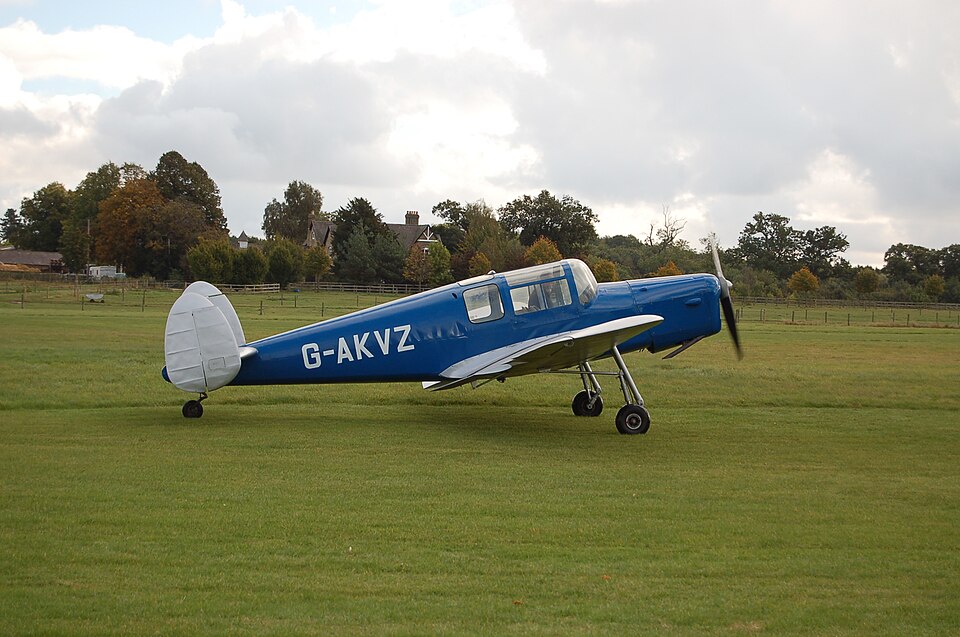
Aircraft and Crew
The aircraft involved was a 1945 Miles M38 Messenger 4B, registration G-AKVZ, powered by one De Havilland Gipsy Major 10 Mk 2 piston engine. The pilot, aged 60, held a Private Pilot's Licence with 3,675 total flying hours, including 365 hours on type. Recent flying experience included 61 hours in the last 90 days and 25 hours in the last 28 days. Two passengers were on board.
Flight Intentions
The intended flight was to a private airstrip near Paddock Wood in Kent. Before departure, the pilot was concerned about the wind, reported from 140° at 10 knots. He requested Runway 11 but was denied because it was closed; Runway 21 was active. The pilot mistakenly believed that Runway 21 would present an excessive crosswind component from the right. Consequently, he decided to take off on Runway 03, which resulted in a right crosswind component.
Takeoff and Accident
The initial takeoff roll proceeded normally until the tailwheel lifted off the ground. At that point, the aircraft entered a ground loop. The pilot attempted to regain directional control, but the aircraft departed the right side of the runway. Both landing gear legs collapsed, the propeller struck the ground, and the engine stopped. The pilot and passengers exited the aircraft without assistance.
Pilot Observations
The pilot stated that the aircraft type has poor handling characteristics in a crosswind takeoff, which is exacerbated when the wind is from the right. He also commented that the brakes had “poor efficiency” and that the rudders provide minimal directional control until the airspeed exceeds about 28 KIAS.
Damage was limited to the underside of the fuselage, landing gear legs, and propeller. No injuries were reported among the three occupants.