History of the Flight
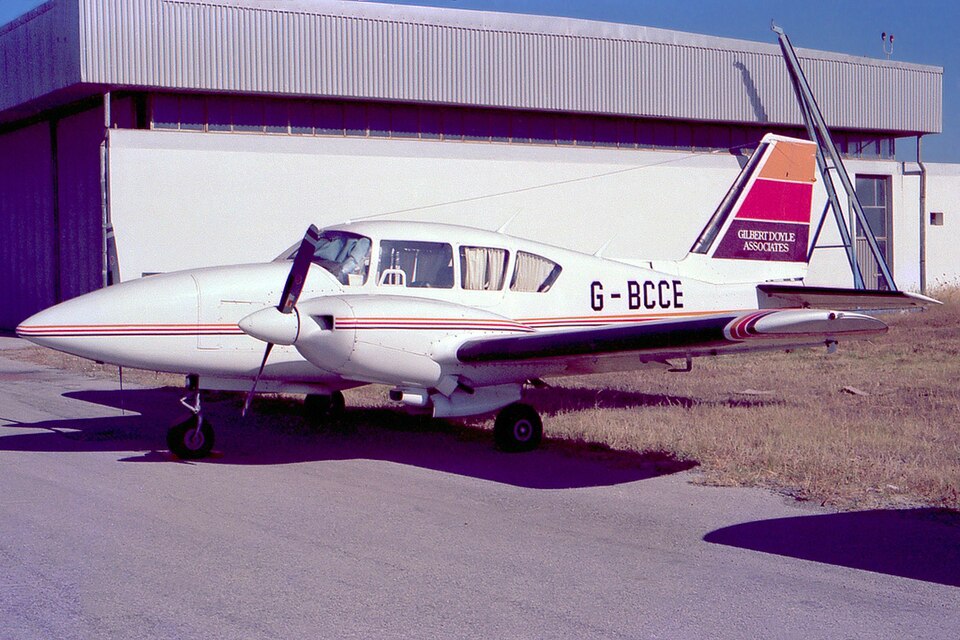
On 30 June 2017 at 1542 hours, a Piper PA-23-250 Aztec, registration G-BCCE, was returning to Shoreham Airport, Sussex, after a training flight. A single-engine go-around had been simulated. When the pilot selected landing gear down for a final landing, cockpit indications showed the nose landing gear had not locked down. Air traffic control confirmed the nose leg was not extended. The pilot exited the circuit and worked through the checklist. Unable to resolve the problem, the pilot landed on the grass runway. The aircraft sustained damage to the nose landing gear and forward fuselage, but both occupants, comprising one crew and one passenger, were uninjured and exited via the main door.
Aircraft Examination
After recovery to a maintenance facility, the AAIB examined the aircraft. The nose landing gear leg and drag links had already been removed. The upper drag link attachment bolt was found broken, with fracture faces showing evidence of reverse bending fatigue. Contamination and corrosion products indicated the fatigue had been propagating over time. The upper drag link attachment lugs were distorted, and both inboard lugs were cracked. Accumulated dirt on the fracture faces indicated the cracks had existed for some time.
Aircraft History
The aircraft, manufactured in 1973, had accrued approximately 7,100 flight hours. Its most recent scheduled check was an annual inspection in February 2017, during which the maintenance agency advised that the joint would have been lubricated. The next 50-hour check was imminent. There had been no recent reports of landing gear anomalies or maintenance, apart from repairing a nosewheel puncture.
Conclusion
The definitive failure mechanism was not established, but it was evident that the drag link attachment bolt had been exposed to cyclic loading exceeding its capability. Failure of the inboard attachment lugs could result in flexing of the drag link attachment, leading to excessive loading of the bolt. The nose landing gear could not be locked down because the upper drag link had detached from the structure. The aircraft manufacturer was informed of this occurrence.