History of the Flight
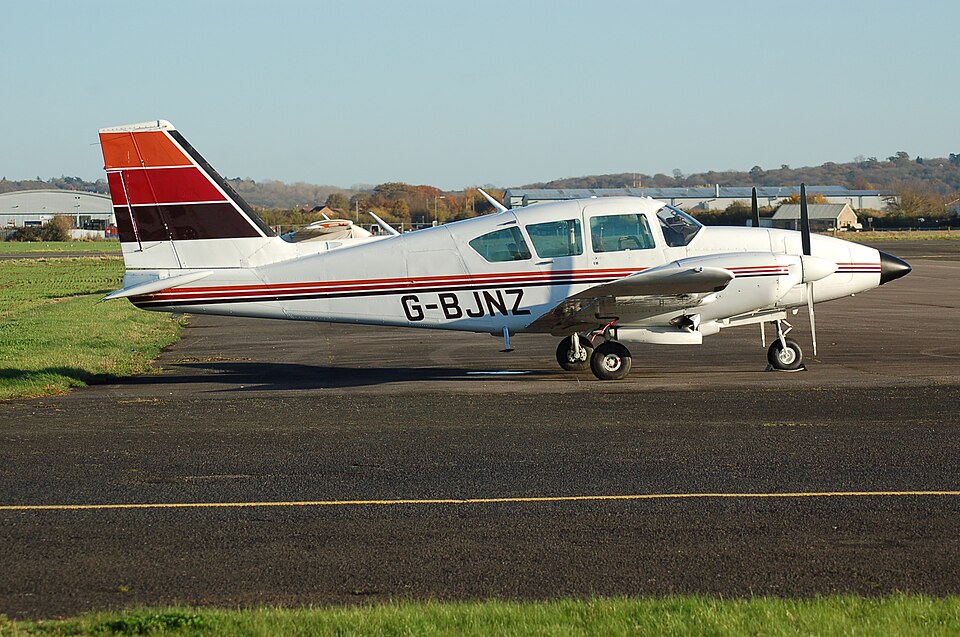
The aircraft, a Piper PA-23-250 registered G-BJNZ, was on a private IFR flight from Le Touquet, France, to Wellesbourne Mountford Airfield in the UK. On board were the pilot and three passengers. The outbound flight had been uneventful.
Engine Failure and Shutdown
During the return flight at FL90, the pilot observed oil leaking from the left engine. Shortly after, the engine began to vibrate. The pilot shut down the left engine and feathered the propeller. He informed ATC and made a PAN call, but declined an offer to divert to Southend Airport, stating he intended to continue to Wellesbourne.
Loss of Altitude and Forced Landing
After descending and canceling IFR, the pilot attempted to maintain level flight at 2,000 ft but found he could not do so despite full throttle on the right engine. Realizing he could not reach Elstree Aerodrome, he selected a grass field with an upslope. The aircraft landed heavily; the landing gear collapsed and the aircraft slid about 100 m before stopping. All occupants exited uninjured.
Investigation Findings
The left engine failed due to a fatigue crack in the No. 5 cylinder barrel. Examination revealed that the top section of the cylinder had fractured and separated, exposing the piston. The right engine showed no significant external defects. The pilot's inability to maintain altitude on the right engine was likely due to a combination of engine wear reducing power and prevailing weather conditions. The pilot's decision to continue the flight was likely influenced by high workload and plan continuation bias.
Aircraft and Maintenance Information
The aircraft was built in 1979 with engines that had accrued 2,212.7 hours since new, exceeding the manufacturer's recommended overhaul life of 2,000 hours or 12 years. The maintenance programme had been adapted following regulatory changes, but continued to include inspections from the now-non-mandatory Generic Requirement No. 24.