History of the Flight
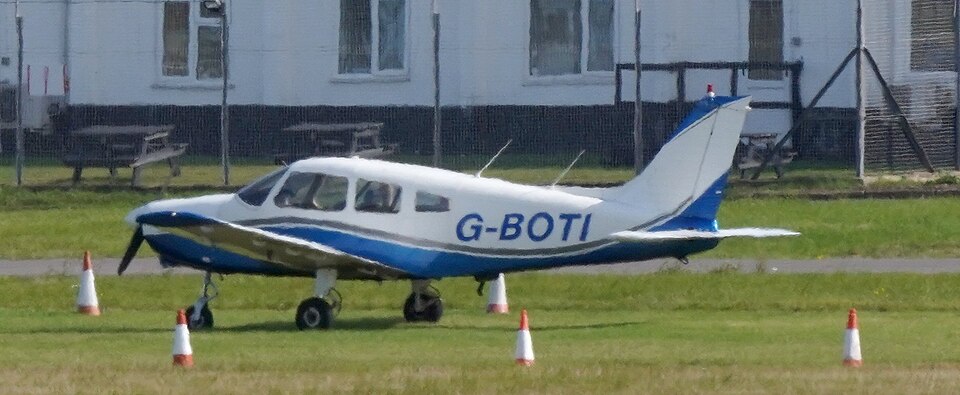
On 22 October 2022, a Piper PA-28-151 (G-BOTI) operated on a private flight from Biggin Hill to Exeter Airport. The aircraft had been leased by a flight school and was undergoing maintenance at Biggin Hill, where the CDI had been reported unserviceable for several months. After maintenance was completed, the engineer confirmed the CDI was serviceable. The pilot, who held a Commercial Pilot Licence with 331 hours total (40 on type), departed with one passenger.
The flight was conducted under IFR. At 1311:37 UTC, the pilot contacted Exeter Radar and requested an ILS approach to Runway 26. At 1324 UTC, the controller instructed the pilot to descend with the glidepath when established on the localiser. The pilot noticed the glideslope bar was centralised and began descending from 2,600 ft, believing he was on the correct glidepath. However, he did not confirm his position using DME. The descent started at 12.5 nm from the runway threshold, approximately 5 nm before the expected descent point for the 3.5° glidepath.
The aircraft descended in IMC, reaching 1,155 ft at 9.4 nm from the threshold. At 1327:13 UTC, the controller queried the altitude and then instructed the pilot to climb. The pilot initially levelled but descended further to a minimum altitude of 1,150 ft. The aircraft was 400 ft above terrain at its closest point. The pilot then executed a go-around, during which he noticed the glideslope deviation indicator remained centralised, realising it was unserviceable. After coordination with ATC, he requested vectors for another ILS approach, using the localiser and stored waypoints in the Garmin GNS430, and landed successfully.
Recorded Data
GNSS track log, radar, and radio recordings were provided to the AAIB. The aircraft departed Biggin Hill at 1150 UTC and climbed to approximately 2,300 ft. At 1318:11 UTC, the controller instructed descent to 2,600 ft. The early descent began at 1325:01 UTC from 2,600 ft, initially levelling at 2,300 ft for 10 seconds before continuing. At 1327:13 UTC, the aircraft was descending at about 800 ft/min at 9.4 nm. The controller's query and subsequent climb instruction occurred over the next minute. The aircraft climbed back to 2,600 ft and was repositioned for a second approach.
Aerodrome Information
Exeter Airport has a single runway 08/26. The ILS approach to Runway 26 uses a non-standard 3.5° glidepath due to terrain. The published descent point from 2,200 ft is 5.5 nm from the threshold; from 2,600 ft, the nominal descent point would have been at approximately 6.5 nm. The approach chart includes a note that the glidepath signal is not to be used beyond 8 nm from the runway threshold.
Aircraft Systems
The Garmin GNS430 in G-BOTI provided navigation information to the CDI. The CDI could display horizontal and vertical guidance from VOR, ILS, or GPS. The pilot selected the ILS frequency but did not use the GPS function for navigation. The glideslope deviation indicator on the CDI had been reported unserviceable before maintenance; no fault was found during maintenance. During the incident, the indicator remained centralised, giving a false indication of being on glidepath.