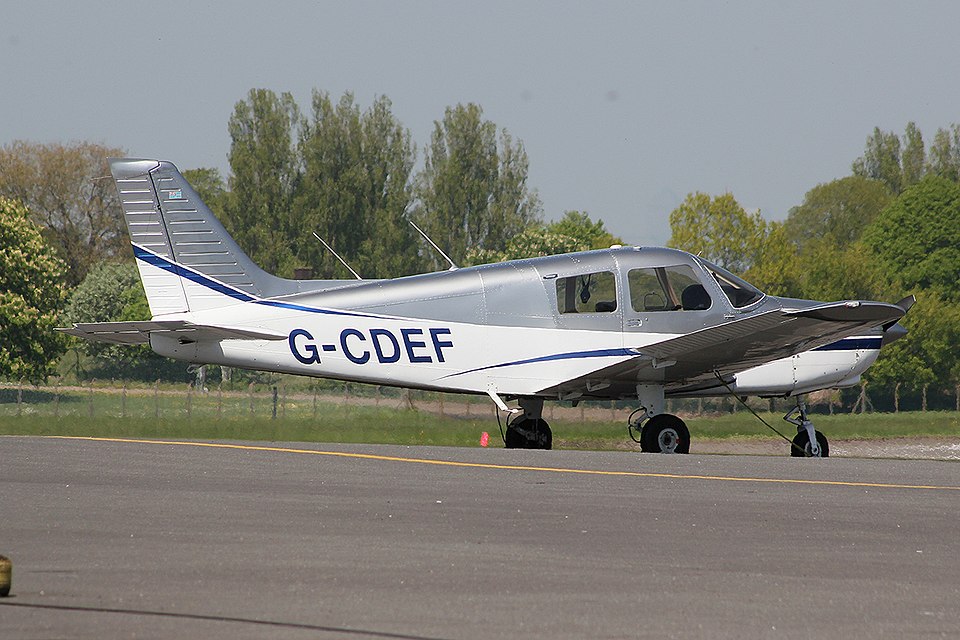
Flight Details
The aircraft, a Piper PA-28-161 Cadet registered G-CDEF, was manufactured in 1994 and powered by a Lycoming O-320-D3G piston engine. The flight was a private trip from Thruxton, Hampshire, to Sandown (Isle of Wight) Airfield, which the pilot had not previously visited. The pilot, aged 64, held an Airline Transport Pilot's Licence with 23,618 total flying hours, including 17 hours on type, and had flown 143 hours in the last 90 days and 68 hours in the last 28 days. There were two passengers on board; no injuries were reported.
Approach and Landing
Runway 05 was in use with good weather and a light wind. The pilot planned an approach speed of 70 kt. At approximately 300 feet, with the indicated airspeed at about 65 kt, the pilot noticed the runway threshold was displaced. He advanced the throttle to increase speed and aimed to land beyond the displaced threshold. The aircraft contacted the runway firmly and bounced. After a second touchdown, the pilot became aware of nosewheel damage, but a subsequent bounce resulted in the propeller contacting the grass runway. The aircraft then stopped.
Aftermath
The pilot and passengers vacated the aircraft uninjured and moved it clear of the runway. Damage was limited to the propeller and nosewheel.
Pilot and Witness Observations
The pilot believed the initial touchdown may have occurred just before the displaced threshold and on an upslope. A witness from the local flying club later reported that the motion of the aircraft indicated pilot-induced oscillation. The Pilot's Operating Handbook for the PA-28 states that at maximum landing weight with Flap 40, the final approach speed should be 63 kt; the pilot had increased this due to a large passenger, though the aircraft was below maximum landing weight.