History of the Flight
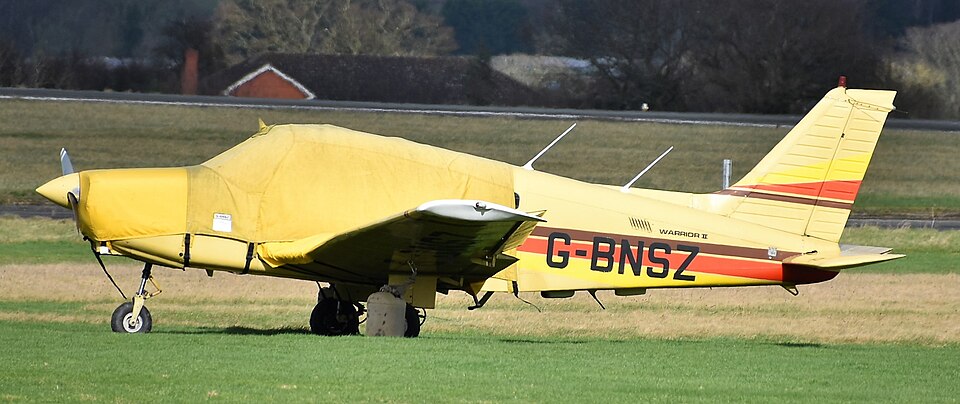
On 9 April 2017 at 0810 UTC, a Piper PA-28-161 Cherokee Warrior II (registration G-BNSZ) was preparing for a local private flight at Halfpenny Green Airfield in Staffordshire. The pilot, who held a Private Pilot's Licence with 56 hours total experience (42 on type), was accompanied by two passengers.
After boarding, the pilot followed the engine start checklist, including priming the fuel system. When the ignition key was turned to start, the engine did not turn over. Two further attempts produced the same result. The pilot then secured the aircraft by closing the throttle, turning off the fuel and electrical systems, and removing the keys.
Exiting the aircraft, the pilot attempted to rotate the propeller by hand to assess whether the engine had seized. He found it stiff and applied more force. The propeller suddenly began spinning, completing approximately five revolutions. The pilot jumped backward and raised his arm instinctively, but the propeller struck his right elbow, causing a 5 mm puncture wound with swelling and bruising. No long-term damage resulted.
Comments
The pilot later stated that the engine had already been primed with fuel from the previous failed start attempts. He speculated that fuel in the cylinders may have detonated when he turned the propeller, causing the engine to run for a few revolutions.
Although the pilot recalled removing the ignition key before leaving the aircraft—which requires the key to be in the 'both magnetos off' position—the possibility remains that one or both magnetos were not properly earthed when the switch was in the off position. The pilot indicated that a magneto check would be conducted prior to the next flight.
The incident highlights the importance of always treating magnetos as live, even when the ignition appears switched off.