Accident Details
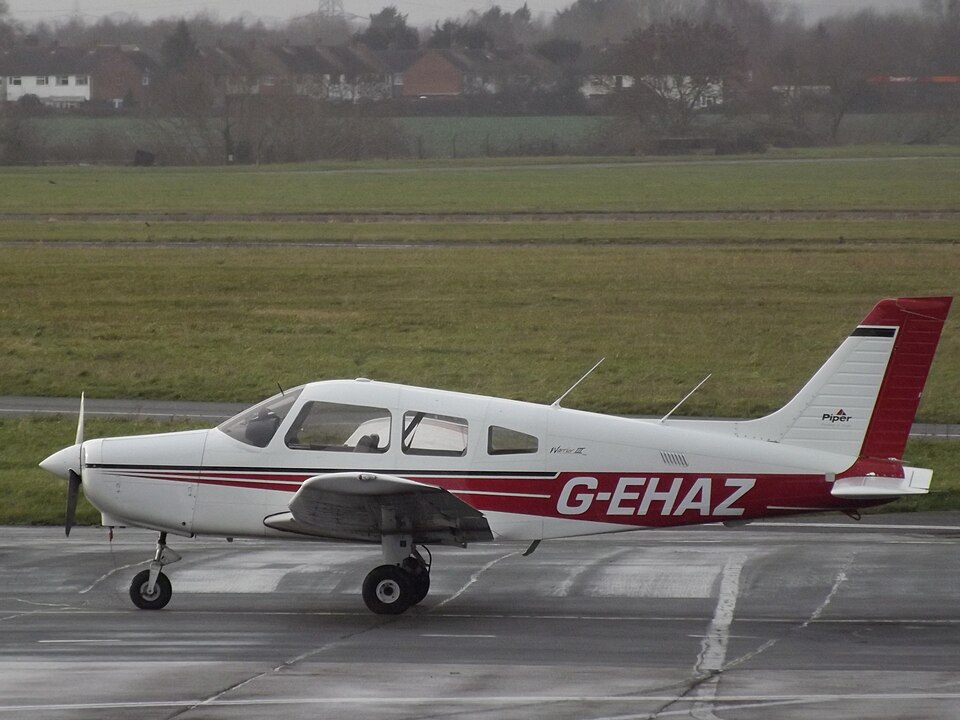
On 1 April 2016 at 1400 UTC, a Piper PA-28-161 Cherokee Warrior III, registration G-EHAZ, experienced an accident during a touch-and-go landing at Breighton Aerodrome, North Yorkshire. The aircraft was on a private flight, initially intending to depart from the grass runway to Kemble. The pilot and one passenger were on board; neither sustained injuries.
Sequence of Events
According to the pilot's report, after taking off from the grass runway, he planned a touch-and-go before proceeding to his home airfield at Kemble. The circuit was flown without incident. Following touchdown, he applied full power. The aircraft did not appear to accelerate, leading the pilot to close the throttle and abort the takeoff. Despite this action, he was unable to stop the aircraft before it overran the end of the runway and collided with a hedge.
Aircraft Information
The aircraft was a 2002 Piper PA-28-161 Cherokee Warrior III, serial number 2842168. It was powered by a single Lycoming O-320-D3G piston engine. The nature of the damage was described as severe.
Pilot Information
The 44-year-old pilot held a Commercial Pilot's Licence and had accumulated 3,639 flying hours, of which 2,500 hours were on the accident aircraft type. In the 90 days prior to the accident, he had flown 305 hours, and in the previous 28 days, 67 hours.
Pilot's Observations
In his report, the pilot expressed the belief that the lack of acceleration may have resulted from a possible combination of the soft grass surface and carburettor icing.