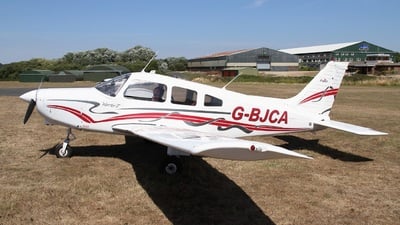
History of the Flight
The flight was a "de-rusting flight" after a four-month hiatus due to public health restrictions. The pilot, aged 62 with 453 total hours (134 on type), had flown no hours in the previous 90 days. After two hours of general handling, he returned to Shoreham Airport for landing on Runway 02. The forecast wind was 330° at 11 kt; reported wind at incident time was 300° at 11 kt. Some turbulence from thermals was recalled.
The aircraft touched down further along the runway and left of centerline. The nosewheel contacted before the main wheels in what the pilot described as a "poor landing". Ground controllability was poor, and after six seconds the nose swung left. The aircraft departed the asphalt runway onto adjacent grass, which the pilot noted was "recently mown and well maintained". The pilot applied full power and became airborne after three seconds. The subsequent approach and landing were uneventful. No damage occurred.
The pilot stated later that he should have "factored in the rust and gone around" and could have delayed the flight to a day with more favourable wind.
Aircraft Performance
The Pilot's Operating Handbook landing distance graph specifies a touchdown airspeed of 39 kt for the declared landing weight. The pilot did not recall excessive speed, but analysis of video footage indicated the airspeed was approximately 64 kt as it crossed the runway threshold.
Nosewheel Landing
The FAA Airplane Flying Handbook warns against forward elevator pressure after touchdown to avoid "wheel barrowing", where weight concentrates on the nosewheel, potentially causing loss of directional control, especially in crosswinds. It notes that wheel barrowing can lead to a ground loop, even in nosewheel aircraft.
Conclusion
The landing exhibited characteristics of wheel barrowing. Excess speed on final approach likely led to nosedown pitch inputs by the pilot, causing nosewheel touchdown before the main wheels. The crosswind's effect on a directionally unstable aircraft, without a correcting input, resulted in the runway excursion. The short time on grass before becoming airborne indicated the aircraft remained close to flying speed.