History
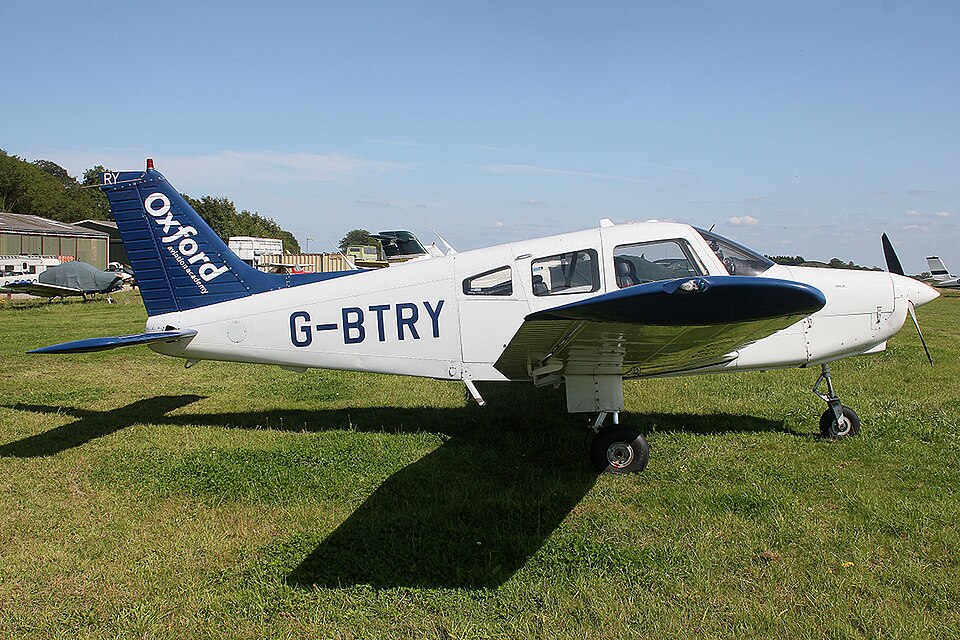
The flight was a private return trip from Ledbury Airfield to Enstone Airfield. The pilot, aged 73 with 18,400 hours total flying experience (1,415 on type), initially positioned for a long final approach to Runway 08 to avoid landing into the setting sun. After a radio call from the airfield indicating Runway 26 was in use, the pilot joined downwind for Runway 26. The pilot found the glare of the setting sun distracting but could see the white frangible boundary fence and runway markings. An instructor waiting at the Runway 26 holding point observed that the aircraft was very low on final approach.
The aircraft's left main landing gear tyre struck the top of a 3.5 m tall light-coloured gravel pile stored on a disused section of the airfield, outside the airfield boundary fence. The gravel pile was on the runway extended centreline, approximately 120 m from the runway threshold. The impact caused the left landing gear leg to detach. The instructor radioed the pilot informing him of the landing gear loss and advised a go-around. The aircraft briefly touched down on the right main landing gear before climbing away.
The pilot decided to divert to Oxford Airport, which had better rescue and firefighting equipment. The instructor briefed Oxford ATC by phone. The pilot landed on Runway 19 at Oxford Airport. Shortly after touchdown, the aircraft left the paved surface to the left and came to rest on the grass, damaging the left wing and tailplane. Neither the pilot nor the passenger was injured. The pilot later stated he had been aware that the disused portion of the airfield was used for sand and gravel storage.
Conclusion
The aircraft struck the gravel pile because it was too low on the final approach to Runway 26. The top of the gravel pile formed an angle of 1.7° to the runway threshold, well below a normal 3° approach path. The glare from the sun on final approach, combined with the pilot's visual focus on identifying the runway threshold, likely contributed to the low descent. The lack of a conspicuous marking on the gravel pile, as recommended in CAP 793, probably contributed to the pilot's lack of perception of the obstacle.
Safety Action
Following the accident, the landowner of the disused portion of the airfield reduced the height of the gravel piles and ensured subsequent gravel storage occurred further away from the airfield boundary to remove the hazard.