Aircraft and Pilot Information
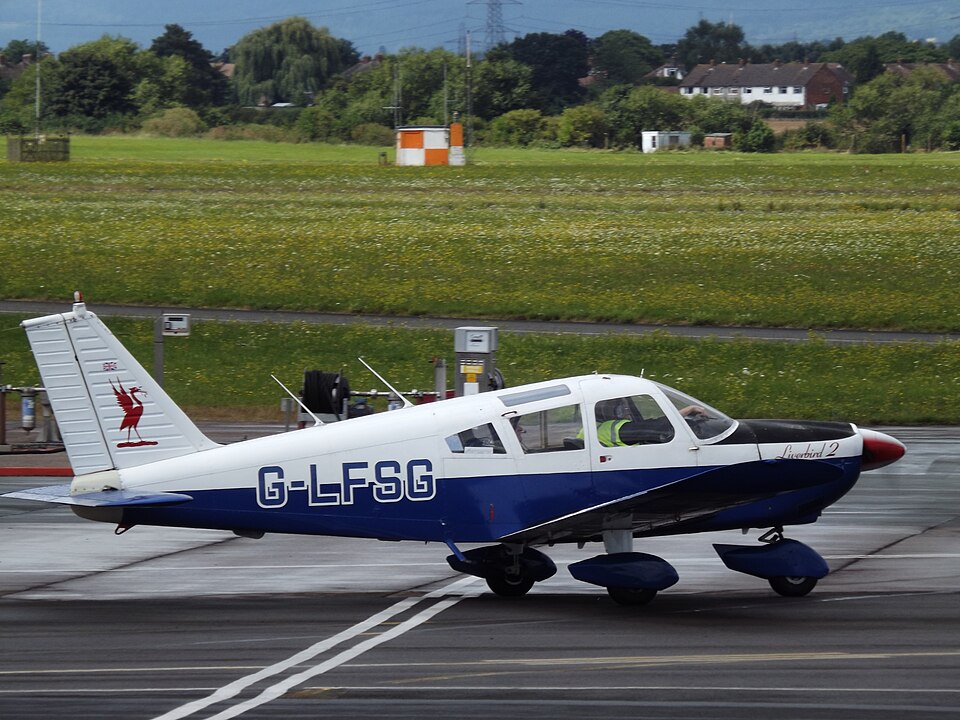
The aircraft involved was a Piper PA-28-180 Cherokee, registration G-LFSG, manufactured in 1970 (serial number 28-5799). It was powered by a single Lycoming O-360-A4A piston engine. The flight was a training detail operated by a flying school at Eshott Airfield, Northumberland. The pilot was a 19-year-old student with a total of 32 hours of flying experience, of which only 3 hours were on the PA-28 type. He had flown 8 hours in the last 90 days and 4 hours in the last 28 days.
History of the Flight
The student had recently transferred from another training provider and had completed several flights at Eshott, becoming familiar with local circuit patterns and procedures. The day before the accident, he had flown a dual training detail before being cleared for solo flight. The instructor assessed the student as “quite capable and reasonably competent in consideration of his age and experience” and deemed him of a standard for solo flying. On the day of the accident, the training detail was to complete solo circuit time, including overhead joins, following a comprehensive briefing. The school considered the weather acceptable for the exercise. Although the wind was forecast to increase later, conditions at the time were judged suitable. A post-accident observation recorded wind from 300° at 8 kt, and the asphalt runway surface was dry.
Accident Sequence
During the final approach to Runway 26, the student experienced some buffeting. He noted that he was slightly left of the centreline and slightly fast (75 to 77 kt). The touchdown occurred later than normal. In an attempt to stop, the student applied firm braking, which caused the aircraft to veer left and depart the runway. The left wing struck a fence post, and the aircraft rotated 180°, coming to rest on the grass Runway 01/19 approximately 30 m from the post, facing east. The pilot radioed for assistance, and a school staff member arrived within 30 seconds. The pilot shut down the aircraft and vacated.
Post-Accident Observations
The total length of Runway 26 was 550 m. Examination of the runway surface revealed a series of fairly long skid marks positioned approximately halfway along the available length, attributed to G-LFSG. During a subsequent debrief, the student reported that he had felt turbulence on the first approach but considered it more severe on the second approach, leading him to decide on a full-stop landing. He stated that the event taught him the importance of discontinuing an approach and performing a go-around if he was not satisfied with flight parameters. The AAIB commented that the 550 m runway length at Eshott is shorter than runways typically used for ab-initio training, noting that landing on such a runway can be challenging for an early soloist.