History of the Flight
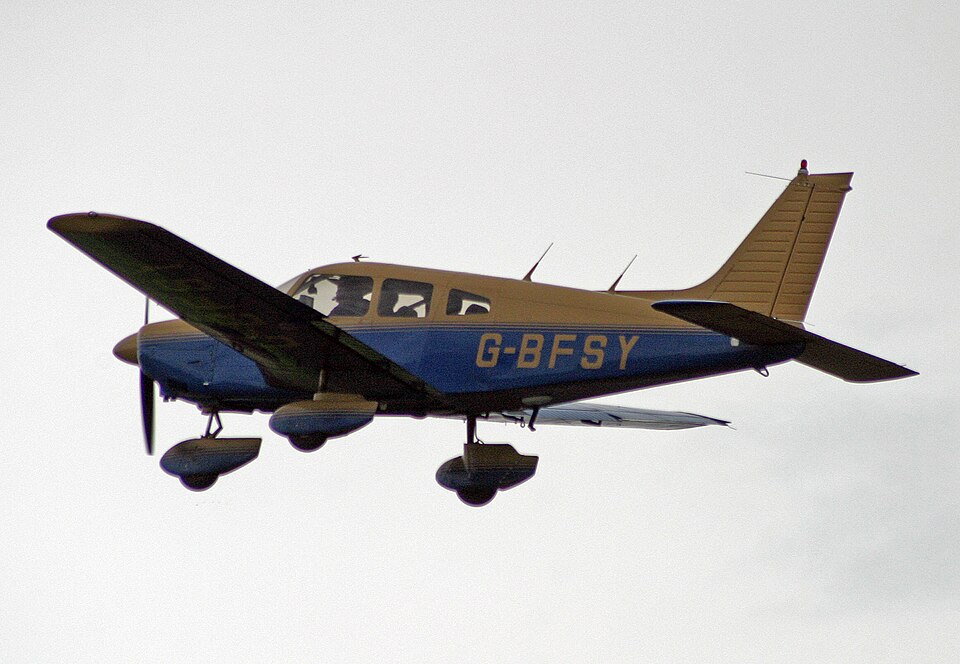
On 25 June 2022, a Piper PA-28-181 (registration G-BFSY) was conducting a private flight to Chatteris Airfield in Cambridgeshire. The pilot, who held an Airline Transport Pilot Licence with 1,800 hours total experience (130 on type), overflew the airfield to assess landing conditions before making an approach onto what he believed was Runway 24. Upon touchdown, the aircraft veered left on rough ground, resulting in a loss of directional control. The aircraft came to rest in bushes at the side of the runway. The pilot later discovered he had landed on a disused section of Runway 23, located at the threshold of Runway 24. There were no injuries to the pilot or the single passenger. The aircraft sustained damage to the left wing and nosewheel spat.
Aerodrome Information
Chatteris Airfield is an unlicensed aerodrome used primarily for parachute operations, requiring prior permission (PPR) from visiting pilots. The airfield has five grass runways ranging from 405 to 810 metres in length. Runway 05/23 is 810 metres long, with a disused section of approximately 290 metres at the north-eastern end. This disused section is marked with white crosses intended to be visible from the air. Runway 06/24 intersects Runway 05/23 at the point where the disused section begins. The pilot reported that he did not see the white crosses during either the overflight or approach, as they were obscured by overgrown grass.
Flight Planning
The pilot used an online flight planning tool that provided basic airfield information, including an airfield plate (diagram) for Chatteris. The basic plate did not mark the disused section of Runway 05/23. More detailed plates, available via subscription (which the pilot held), indicated the disused section with white crosses and contained a warning. However, on this occasion, the detailed plate did not display when the pilot was planning the flight. Additionally, the visiting pilot information on the airfield’s flying club website showed an older plate without disused runway markings and advised that Runway 05/23 was under construction, recommending checking availability. Whether PPR was obtained by the pilot is disputed between the pilot and the airfield.
Conclusion and Safety Actions
The investigation concluded that the pilot landed on a disused section of runway due to a combination of insufficient detail available during flight planning and the disused runway markers being obscured by long grass. In response, the airfield management cut the grass on the disused section to improve visibility of the white crosses. The flight planning tool provider updated their airfield plate to show the disused section. The flying club’s website is also updating its visiting pilot information to display the latest plate with the disused section clearly marked.