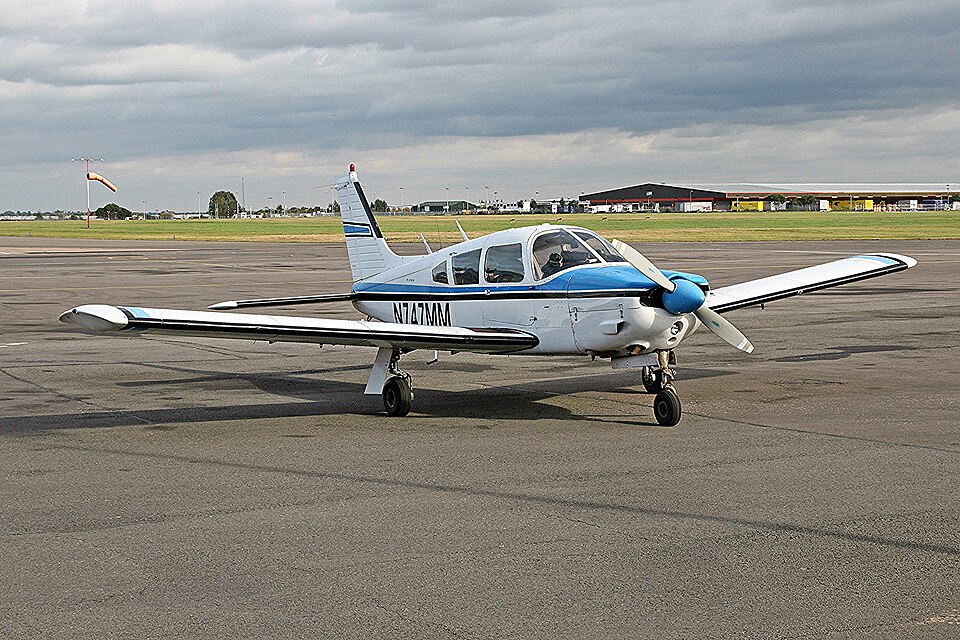
History of the Flight
The pilot, accompanied by a passenger who was also a qualified pilot, was conducting a cross-country flight from Cumbernauld to Oxenhope, with a planned continuation to Denham. On final approach to Runway 11 at Oxenhope Airfield, the aircraft was configured for landing with gear down and full flap. As the aircraft neared a road and a dry stone wall west of the threshold, a sink developed, destabilising the approach. The pilot initiated a go-around and increased power, at which point a loud metallic sound was heard from the left side. The left main gear status light extinguished, and abnormal control inputs were required to maintain stable flight. The pilot continued the go-around, retracted the flaps without raising the landing gear, and flew a gentle climbing left-hand circuit before setting a southerly course.
Assessment and Decision
The pilot and passenger observed that the left flap had over-travelled upward, while the right flap was correctly positioned. Deformation of the upper skin of the left wing was visible. The aircraft climbed slowly, requiring full right rudder and at least two-thirds right aileron to maintain heading. After discussion, they decided to land at Tatenhill Airfield, approximately 70 miles south, which had a hard runway, emergency cover, and did not require permission to transit controlled airspace. The route was over benign terrain with few obstacles.
Landing at Tatenhill
On arrival, ground observers reported that the left landing gear was dangling freely. A normal approach was made, with preparations for a forced landing and immediate exit. The aircraft touched down on the right wheel, then the nose wheel. As it decelerated, the left wing tip contacted the ground, and the aircraft slewed through 90 degrees before stopping just off the runway edge. Both occupants were uninjured.
Damage
Examination revealed that the left landing gear had struck the wall at Oxenhope, causing significant damage to the gear leg, wing, and flap structure. The left landing gear was partially detached, and the wing and flap sustained damage.
Discussion
Both pilot and passenger were experienced GA pilots. The passenger had briefed the pilot on approach considerations for Runway 29 but forgot to mention that the airfield plate and website warn of downdraught hazards on Runway 11. With hindsight, they considered the causal factors to be the pilot's unfamiliarity with the airfield and perhaps a loss of awareness of the changing perspective due to concentrating on approach speed. The sudden sink was probably caused by a downdraught as the aircraft was about to overfly the wall at the airfield edge, leading to an unstable approach. They decided it was unwise to re-attempt landing at Oxenhope and, after assessing options, chose Tatenhill as the nearest suitable airfield.