Synopsis
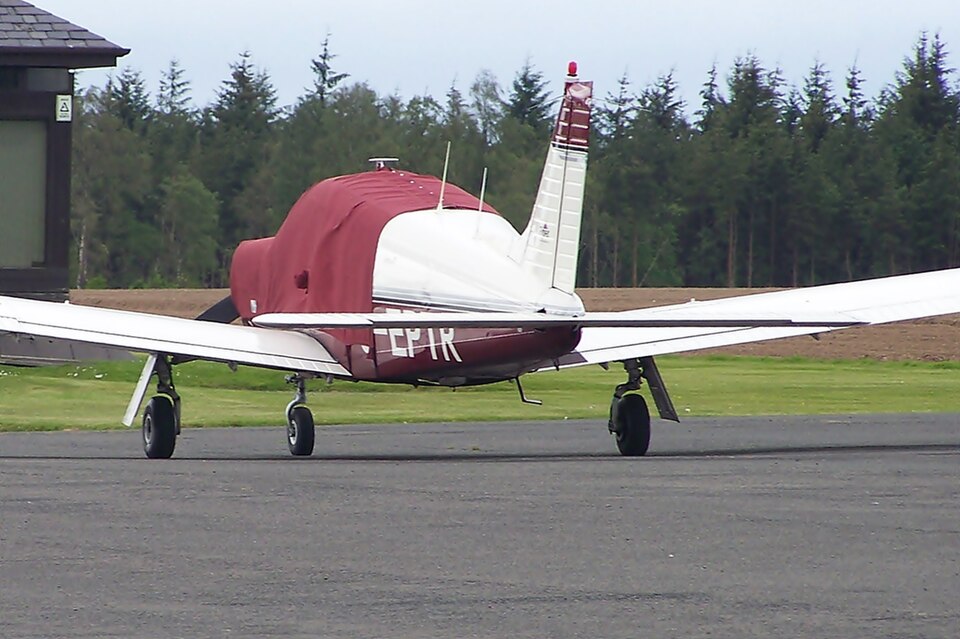
On 19 May 2023, a Piper PA-28R-200 (registration G-EPTR) sustained damage after landing at Perth Airport with its landing gear retracted. The two occupants, a student and an instructor, were not injured.
History of the Flight
The training flight had concluded general handling and returned to the circuit. On the sixth downwind leg, both pilots focused on monitoring another aircraft conducting practice engine failure after takeoff, which was nearby. This distraction caused them to omit lowering the landing gear and skip the final checks. The circuit was tighter than normal, and the aircraft was slightly high on final. The instructor provided guidance to the student, further diverting attention. As the tail skid contacted the runway, the instructor recognized the gear was up but deemed a go-around too late. The aircraft slid about 100 m before stopping.
Aircraft Information
G-EPTR, a 1972 Piper PA-28R-200, is equipped with a retractable landing gear. Three green lights indicate gear down and locked; a yellow light shows transit. A red warning light at the top of the panel illuminates with an audible horn when power is reduced below approximately 14 inches of manifold pressure. The aircraft also had a backup automatic gear extender, which was disabled because the override lever was latched, as was customary for this aircraft. The gear warning horn emits a 90 Hz tone, but neither pilot recalled hearing it or seeing the red light. The warning devices were not tested for functionality.
Aerodrome Information
Perth Airport operates an Air Ground Communications Service (AGCS), relying on pilot reports for traffic information. The student was accustomed to an air traffic control service, and both pilots noted the circuit could be busy with diverse aircraft types, requiring vigilance.
Human Factors
Distractions are a common cause of errors. The CAA Safety Sense Leaflet highlights checklist omission due to distractions, such as traffic in the circuit. Selective attention can cause pilots to miss auditory and visual warnings during high workload.
Analysis
The crew omitted the landing checklist and final gear check, likely due to distraction from nearby traffic and instructor guidance. Neither pilot perceived the warnings, possibly because of selective attention or late activation of the horn due to power settings. The cockpit layout made it difficult for the right-seat instructor to see the gear indicators. The backup system was disabled as per normal practice, consistent with manufacturer guidance.
Conclusion
The gear-up landing resulted from failure to perform checks, probably caused by distraction from circuit traffic and instructor guidance. The aircraft operated per manufacturer recommendations.