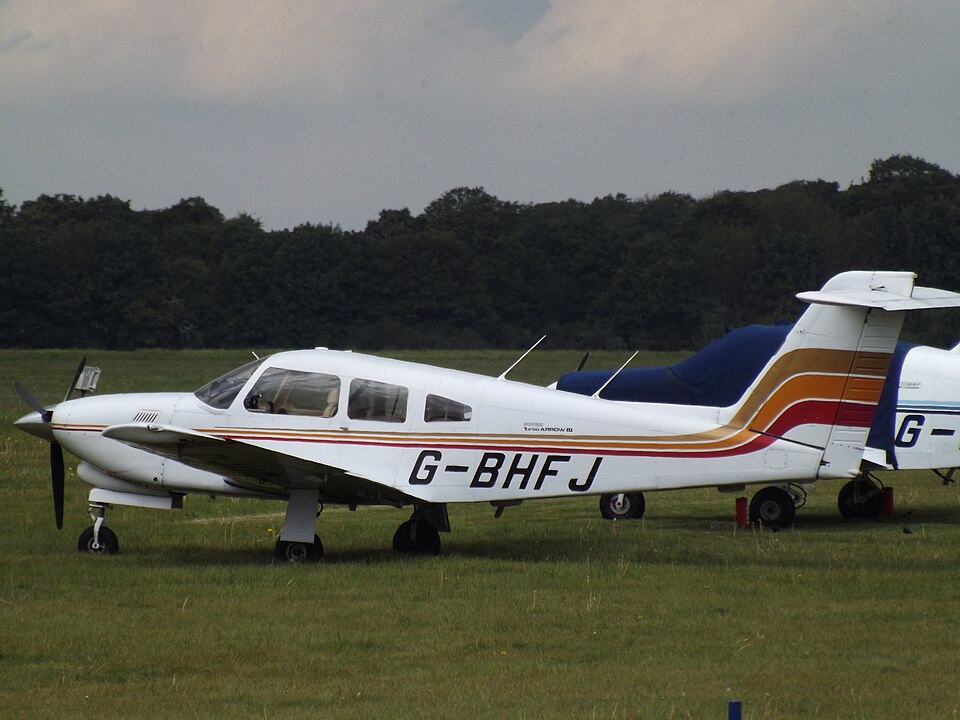
History of the Flight
The aircraft, a Piper PA-28RT-201T Turbo Cherokee Arrow IV (registration G-BHFJ), was on its third flight after a 50-hour maintenance check. While on the downwind leg for Runway 24 at Wycombe Air Park, the pilot selected the landing gear down. The main landing gear green position indicator lights illuminated, but the red warning gear unsafe light also came on, indicating the nose landing gear had not fully extended. After repositioning north of the airfield, the pilot attempted emergency landing gear extension procedures without success; the nose gear remained partially extended. A flypast of the ATC tower allowed visual confirmation of the gear position by ATC and fire service personnel. The pilot and passenger, both commercial pilots, agreed that the pilot would fly the approach and landing, and the passenger would shut down the engine at the pilot's command once landing was assured. A normal approach to Runway 24 was flown, and at about 70 ft above ground level, the pilot ordered the engine shutdown. The aircraft landed on its main wheels, then settled onto its nose as speed reduced, causing the propeller to strike the runway several times before coming to rest left of the centerline. Both occupants were uninjured and vacated via the cabin door.
Aircraft Examination
Inspection revealed that a flexible fuel drain hose, running from the engine to the left side of the lower engine cowl, had become detached at its fitting with the lower cowl. This loose hose restricted the movement of the nose landing gear leg, preventing full extension. The operator's maintenance facility determined the probable cause of the hose detachment was that the hose end fitting had not been tightened fully after the lower cowl was refitted during the recent 50-hour check. That connection required disassembly for cowl removal during that inspection. As a corrective action, the maintenance facility introduced an additional verification check for this task to prevent recurrence.