History of the Flight
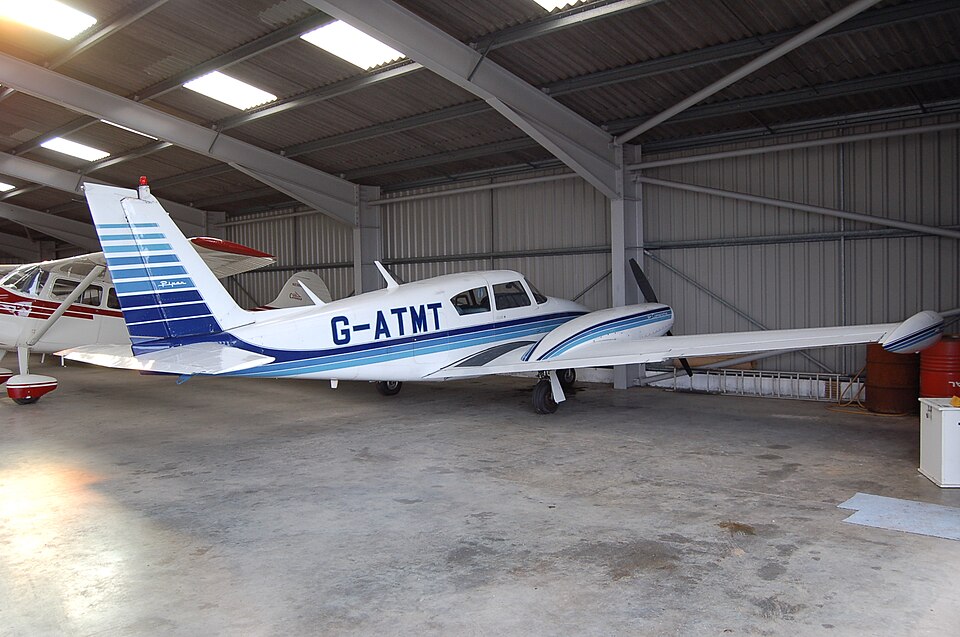
The pilot of G-ATMT, a 1964 Piper PA-30 Twin Comanche, departed Turweston Airfield at 1414 UTC on a private flight to Chalgrove Airfield to collect two passengers. After takeoff, the aircraft climbed to approximately 2,000 ft amsl and turned south. At 1419 hrs, east of Bicester, it began descending, reaching 1,000 ft amsl at 1423 hrs. The aircraft continued south until 2.7 nm east of Chalgrove, then turned left onto a track of about 060°M, heading toward higher ground with terrain up to 850 ft amsl. It flew along the ridge at approximately 1,100 ft amsl (300–400 ft agl) for 1.5 nm, then turned left through 270° back over lower ground before again heading toward the ridge at 400–500 ft agl. The aircraft struck treetops at 920 ft amsl on the Chilterns escarpment, near Aston Rowant Nature Reserve. The wreckage trail extended 120 m, with both engines detached and fuel tanks empty. The cockpit was badly disrupted.
Witness and Weather Information
Witnesses near the accident site reported poor weather conditions. One described the weather as “foggy and miserable [with] non-existent visibility” and heard the aircraft twice, about two minutes apart. Two witnesses walking together heard an aircraft overhead, saw only its “shadow” due to fog, and heard it a second time “as if it had doubled back.” A passenger-pilot waiting at Chalgrove noted good visibility under a cloudbase that permitted visual circuits, but observed that the ridge “was in cloud from about 100 ft from the top.” A National Police Air Service helicopter dispatched to the scene reported that the cloudbase lowered from 800 ft to 600 ft amsl and visibility deteriorated from 10 km to 6,000 m as it transited west of the accident location; low cloud on the ridge prevented reaching the site.
Aircraft Examination
The aircraft was extensively damaged. Examination revealed no pre-impact damage; flight controls were intact with no evidence of restriction. The landing gear and flaps were retracted. Both engines rotated freely, spark plugs appeared normal, fuel selectors were set to main wing tanks, and the altimeter subscale was set to 1012 hPa. The damage was such that the accident was not survivable.
Pilot Information
The 64-year-old pilot held an EASA Private Pilot’s Licence with a Multi-engine Piston Rating and Instrument Rating (Restricted), valid until 31 May 2017, and a Class 2 Medical Certificate valid until 17 June 2017. His total flying experience was 10,673 hours, with 2,140 hours on type. However, he had flown only 3 hours in the last 90 days and none in the last 28 days. The aircraft’s last scheduled 6-month maintenance inspection, due 19 October 2016, had no record of completion.
Conclusion
The aircraft was operating below 1,000 ft amsl in an area with a Minimum Safe Altitude of 2,200 ft. It likely flew in Instrument Meteorological Conditions below that altitude for at least 1 minute 45 seconds before colliding with trees.