History of the Flight
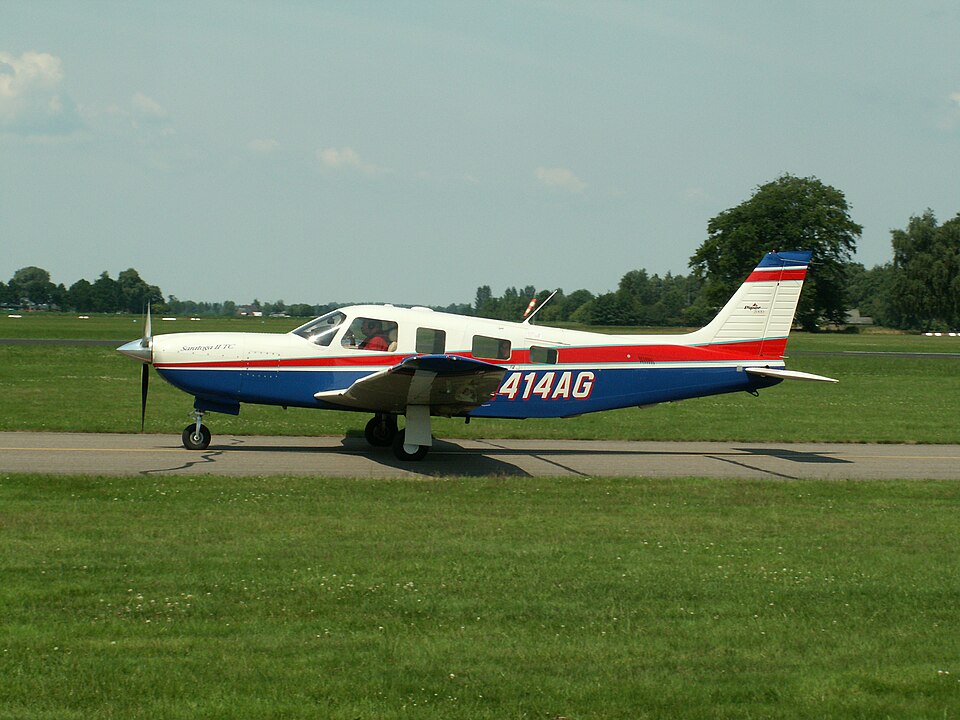
On 23 August 2017, at approximately 0827 hours UTC, a Piper PA-32R-301T (registration N414AG) departed from Retford (Gamston) Airport en route to Bagby (Thirsk) Airfield on a private flight. The forecast indicated rain showers with visibility reduced to six kilometres. As the aircraft approached York, the pilot encountered Instrument Meteorological Conditions (IMC) and observed numerous precipitation returns on the Stormscope. He reduced power and descended to 2,000 ft amsl (about 1,900 ft agl) to remain below cloud. Once in sight of the surface, the rain became extremely heavy.
While levelling, the engine suddenly stopped without any preceding unusual noises or coughing. The propeller windmilled. The pilot immediately switched to the right fuel tank and turned on the electric fuel pump. He also cycled the magneto switch, adjusted the mixture, and switched back to the left fuel tank, which contained more fuel. None of these actions restored engine power. He then selected the alternate air intake source and established a glide with 10° of flap. When the engine still did not restart, he re-selected the primary air source.
Forced Landing
At approximately 1,000 ft agl, the pilot chose a group of small fields with cattle, assuming they would be relatively flat. He was in radio contact with RAF Linton-on-Ouse and declared an emergency. Asked to select transponder code 7700, he began to do so but redirected his attention outside, estimating slant visibility at about 3,000 m. He continued on a northerly heading into a tailwind of five knots from the southeast, accepting the tailwind rather than seeking an alternative site.
About 200 ft above the chosen field, he selected landing gear down and full flaps, maintaining a relatively fast airspeed to avoid stalling. He also released the door catch but could not jam it open. During the flare, he retracted the flaps to improve braking on wet grass and turned off the master switch. The touchdown and ground roll were gentle, but the aircraft continued through an old hedge line with trees. The pilot steered toward a gap, but the right wing and associated landing gear detached upon striking a tree. The outboard left wing also hit a tree, sustaining damage but remaining attached. The aircraft skidded across the adjoining field, losing the left main landing gear. Nosewheel steering remained effective, allowing the pilot to direct the aircraft between two ponds. The aircraft came to a halt approximately one metre from the edge of a pond. The pilot, uninjured, exited the aircraft without difficulty. He estimated 25 gallons of fuel remained in the left wing tank; the right wing tank had burst.
Engineering Inspection
Several days later, engineers inspected the engine. The paper air filter element was found swollen and puffy, indicating it had been very wet but had begun to dry out. After replacing the filter, the engine started and ran normally. It was assessed that the extremely heavy rain had saturated the paper filter element, starving the engine of air. The alternate air source bypasses the filter; engineers suggested that selecting it before the primary source became blocked might have allowed the engine to continue running. The pilot later heard anecdotal evidence of a similar incident where a partially blocked filter caused rough running but not stoppage, and opening the alternate air source immediately recovered power.
Comments
The AAIB noted that in 2010, the engine manufacturer issued a 'Tech Tips' document addressing loss of engine power in heavy rain with paper air filters. It stated that saturated filters impede airflow, and that carburettor heat to bypass the filter and re-leaning were successful tactics. However, the accident aircraft had a turbo-charged engine without carburettor heat control.