History of the Flight
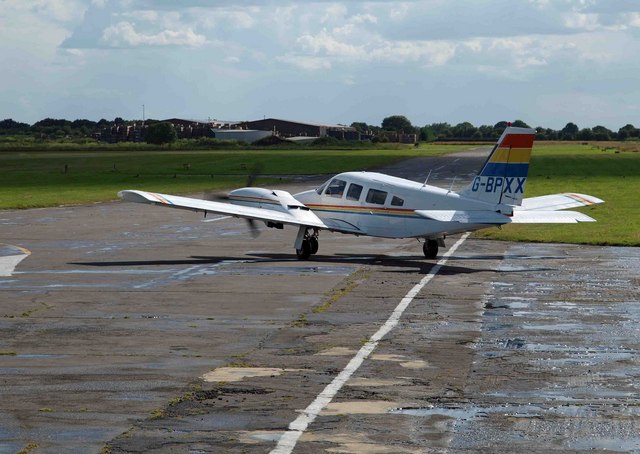
On 13 October 2017 at 0800 hrs, a Piper PA-34-200T Seneca II, registration G-BPXX, was conducting a private takeoff from Runway 28 at Sherburn-in-Elmet Aerodrome, West Yorkshire. During the takeoff roll at 70 kt IAS, the pilot applied rearwards pressure to the control column but the aircraft did not rotate as expected. At 80 kt IAS, he increased the pressure but still no response. He then selected idle power and depressed the toe brakes; he estimated the IAS was close to 90 kt when he began to reject the takeoff.
Despite maximum braking, the aircraft overran the asphalt runway and traversed approximately 200 m of short grass. It then encountered a patch of rough ground, causing the left main landing gear to collapse. The aircraft continued over a disused concrete area; the pilot kept it straight by applying full right brake pressure. It eventually stopped after impacting a hedge at an estimated groundspeed of two or three knots. All three occupants exited without injury.
After the accident, the pilot photographed tyre marks on the runway indicating braking began approximately 100 m before the runway end and the aircraft remained on the centreline. He had previously calculated the factored takeoff ground roll at maximum takeoff weight as 600 m, with a takeoff run available of 799 m.
Pilot's Assessment
The pilot estimated that, in similar circumstances, his aircraft normally rotated after about 500 m of ground roll. He believed 4–5 seconds elapsed between his initial rotation attempt and his decision to reject the takeoff, and he was applying brake pressure with 120 m of runway remaining. He concluded that, because this was an operation from an unbalanced runway, he should have rejected the takeoff immediately upon noticing abnormal control response; by allowing the aircraft to accelerate and attempting further rotation, the available stopping distance was substantially reduced.
Upon examining the aircraft, the pilot found the stabilator trim tab was at the fully nose-down position, although the cockpit indicator suggested a slightly nose-up setting (the takeoff position). He recalled that before the flight, his front seat passenger, also a qualified pilot on-type, had exercised the trim wheel fully in both directions. The pilot had verified the trim indicator at the takeoff position before departure but concluded that the mis-positioned trim tab caused the resistance he encountered when applying rearwards pressure to the control column.
Engineering Inspection
A subsequent inspection by an aircraft engineer confirmed that the trim tab position indicator was de-synchronised from the actual trim tab position. With a neutral indication, the tab was at or near maximum nose-down deflection. The engineer suspected that, for an unidentified reason, the trim indicator needle had become de-synchronised from the actuator when the trim wheel was exercised quickly through its full range. He noted that he had occasionally observed this on other aircraft types from the same manufacturer and that in the PA-34, it is difficult to view the trim tab position from the cockpit.