Synopsis
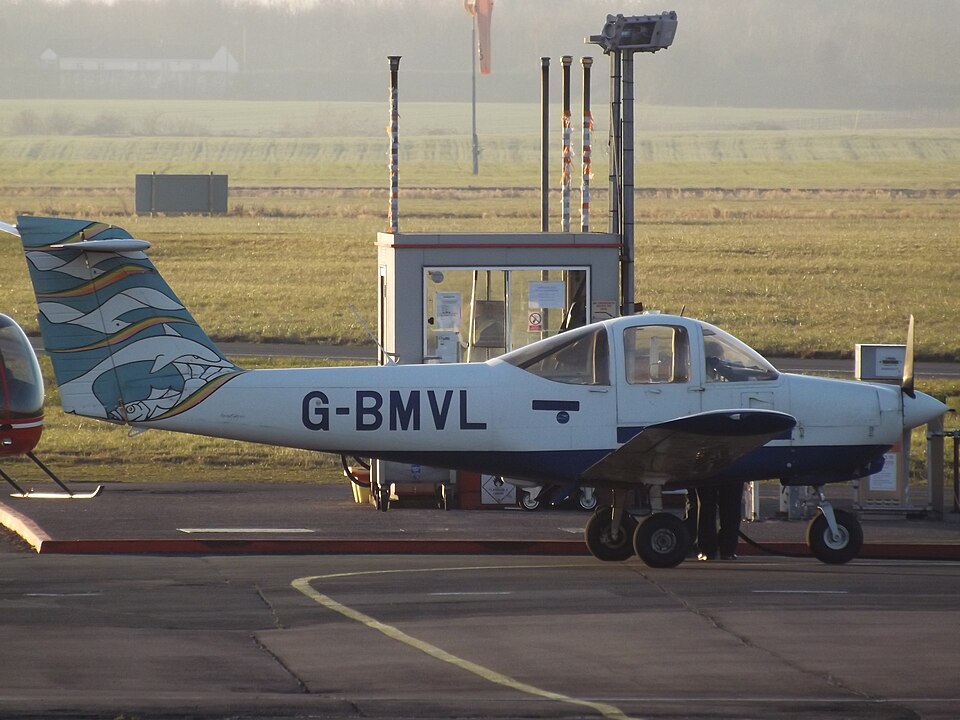
On 12 May 2018, at 1215 UTC, a Piper PA-38-112 Tomahawk, registration G-BMVL, was involved in an accident at Caernarfon Airport, Gwynedd, Wales. The pilot in command (PIC) occupied the right seat, while the left seat occupant was an unqualified pilot—a student pilot with 26 hours on another aircraft type. The flight was private. The unqualified pilot attempted to land, but during the final approach the PIC took control and attempted a go-around. The flaps remained in the landing configuration. The aircraft adopted a nose-up attitude, deviated left, stalled, and hit the ground. It then crossed a public road and came to rest inverted. Both occupants sustained minor injuries, and the aircraft sustained extensive damage.
History of the Flight
The PIC, who was not a flight instructor, allowed his senior work colleague, an unqualified pilot, to conduct the takeoff from Blackpool Airport and fly to Caernarfon. The PIC monitored and made radio calls. The unqualified pilot had received no instruction on the Tomahawk type. After an overhead join for Runway 25, the aircraft entered the circuit in good visibility with an estimated 5 kt crosswind from the left. On final approach, the PIC noted they were too high; the unqualified pilot acknowledged but did not correct the approach path.
Accident Sequence
Shortly before touchdown, the PIC intervened by selecting idle power and following through on the controls. He then applied full power and announced a go-around, but did not retract the flaps. CCTV showed the mainwheels contacted the ground about one-third of the way along the runway, causing a bounce. The aircraft diverged left, bouncing twice more, then departed the runway in a nose-up, left wing-low attitude. The PIC realized the aircraft was not climbing and saw a hangar ahead; he turned away, but the aircraft descended and hit the airfield perimeter fence. CCTV indicated the aircraft turned left, climbed to about 20 ft above ground, then adopted a wings-level, nose-up attitude, overflew a parallel taxiway, and descended out of view. It passed between hangars and a mast, bounced on grass, struck the ground near the fence, crossed the fence and a public road, hit another fence, and stopped inverted near a farm building.
Injuries and Aftermath
Both occupants received minor injuries. The unqualified pilot saw fuel leaking from the left wing and exited through an open window after about 20 seconds. The PIC made the engine and electrics safe but could not release his seatbelt; the unqualified pilot returned to assist him. Paramedics from a locally-based air ambulance attended promptly.
Pilot's Assessment
The PIC later acknowledged that his decision to let his senior colleague fly was likely influenced subconsciously by their work relationship. He knew the colleague was not a qualified pilot and should not have manipulated controls without a flight instructor. He also noted that a go-around should be initiated if touchdown cannot be achieved in the first third of the runway, and that appropriate flap selection is essential during a go-around. He stated that while he habitually moved the flap lever during touch-and-go landings, his actions in this unexpected, stressful situation were affected, and the full flap setting led to loss of control.