Introduction
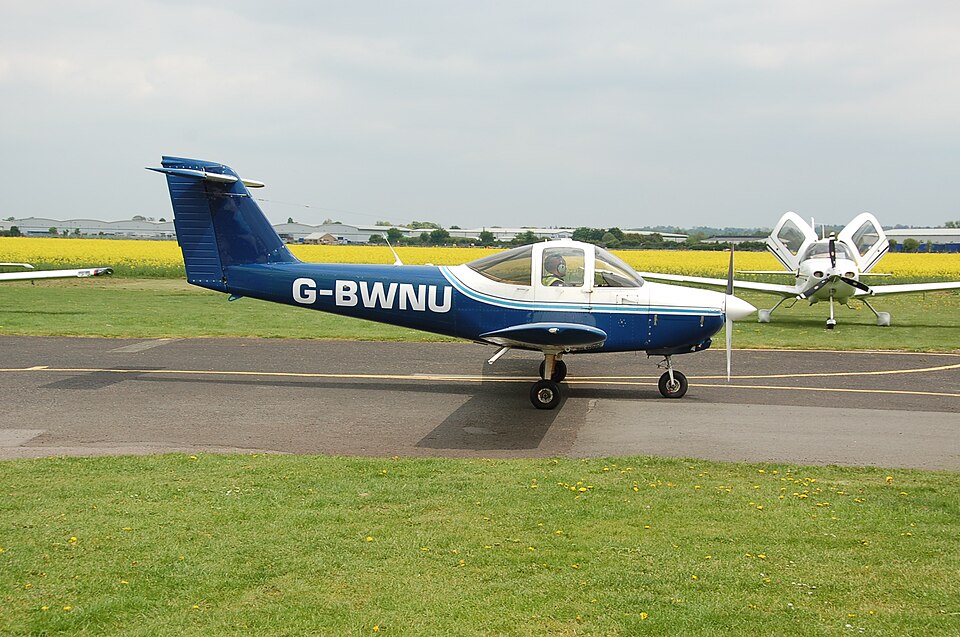
On 29 August 2015, a Piper PA-38-112 Tomahawk (registration G-BWNU) sustained damage to its left flap during a touch-and-go circuit at Cotswold Airport, Gloucestershire. The aircraft, manufactured in 1978, was powered by a single Lycoming O-235-L2C piston engine. The private flight was operated by a 68-year-old pilot holding a Private Pilot’s Licence, with 298 total flying hours, including 53 hours on type. His recent flying experience totalled 2 hours in the last 90 days and 1 hour in the last 28 days. The pilot was the sole occupant and reported no injuries.
Flight Details
The pilot was conducting touch-and-go circuits to Runway 26, which had an asphalt surface and runway lighting. Weather conditions were good, with a light wind varying between 250° and 270° at approximately 4 kt, visibility in excess of 10 km, and scattered clouds at 4,000 ft. After two normal powered circuits, during which he touched down on the runway threshold markings, the pilot decided to perform a glide approach on the third circuit.
Incident Sequence
At the end of the downwind leg, at a height of about 1,000 ft, the pilot closed the throttle, established the glide, and selected the first stage of flap. He reduced airspeed to 70 kt and selected the second stage of flap while flying a continuous turn approach. On final approach, once satisfied he would achieve his aiming point, he selected the third and final stage of flap. The sink rate increased, prompting the pilot to apply power; however, during touchdown, the left landing gear wheel struck a runway threshold light.
Aftermath
After landing, the pilot found the left flap damaged by glass debris from the struck light. He considered that an earlier application of power would have prevented the incident.
Aircraft Damage
The nature of damage was limited to the left flap.