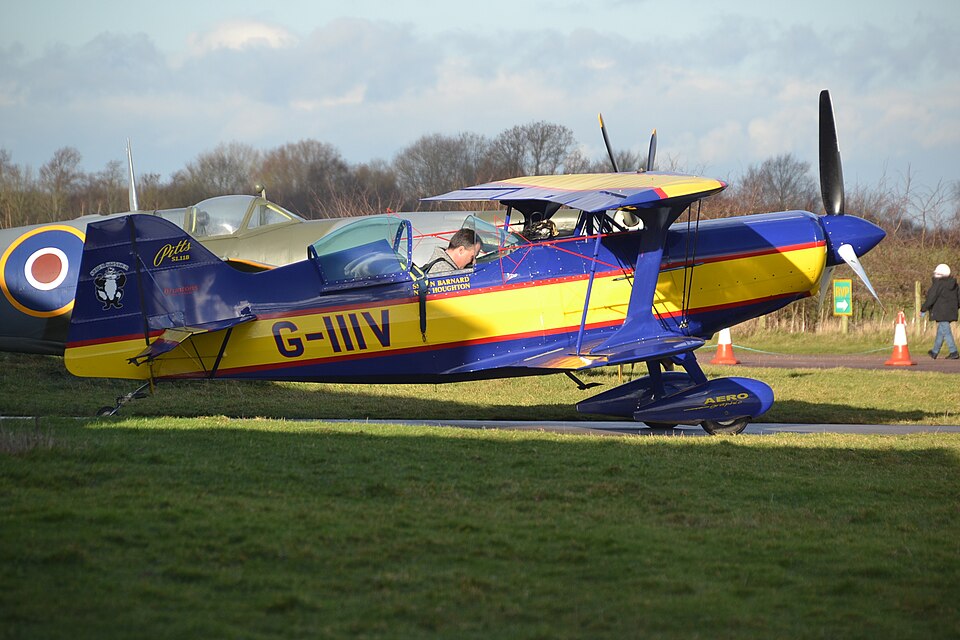
Accident Overview
On 30 July 2015 at 1700 UTC, a Pitts Super Stinker 11-260 (Modified), registration G-IIIV, was engaged in a private local flight to practise aerobatics. The aircraft was powered by a single Lycoming AEIO-540-D4A5 piston engine and was manufactured in 2002 (serial number PFA 273-13005). The pilot, aged 47, held a Private Pilot’s Licence and had accumulated 1,300 flying hours, including 200 hours on type, with 33 hours in the last 90 days and 14 hours in the last 28 days.
Events During Flight
Shortly after commencing the aerobatic routine, the pilot reported that the engine began to run roughly and the available power “dropped off”. In response, he selected the mixture to rich and turned on the electric fuel pump, but the engine performance did not improve. A forced landing was carried out in the only available field, which had a 30° upslope and contained sheep.
Damage and Injuries
The aircraft sustained substantial damage to the engine, propeller, landing gear, top wing, and rudder. The pilot, who was the sole occupant, was uninjured and was able to vacate the aircraft normally.
Subsequent Inspection and Comments
The constructor and maintainer of the aircraft commented that an initial inspection of the engine did not reveal any defects. He considered it possible that, during the aerobatic manoeuvring, air may have been ingested into the fuel supply system and, due to the length of pipework on this particular model, it may have taken time to clear. Further work is planned to inspect and fault-find the engine and fuel system, with any relevant findings to be reported in a future AAIB Bulletin.