History of the Flight
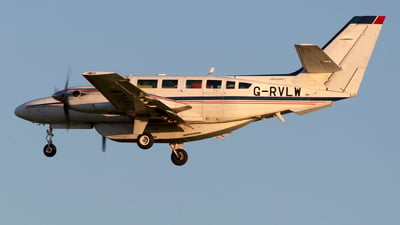
On 6 March 2021 at 1500 UTC, a Reims Cessna F406 (registration G-RVLW) was operating a cargo flight from Göteborg Landvetter Airport, Sweden, to East Midlands Airport, UK. The aircraft had departed Göteborg at 1330 hrs, with the pilot having already flown the aircraft from East Midlands to Göteborg earlier that day. Each flight sector lasted approximately three hours. While cruising at FL180 over the North Sea, the pilot experienced a rapid-onset headache and found he could not locate a regularly used function on his electronic flight bag. Recognizing these potential symptoms of hypoxia, he checked his oxygen system and used a finger pulse oximeter to measure his oxygen saturation. The reading was much lower than normal. He increased the oxygen flow through the regulator, but when this did not improve the situation, he switched to the other oxygen supply bottle. Within minutes, his symptoms resolved and his oxygen level returned to normal. The flight continued to East Midlands without further incident.
Aircraft Information
The Reims Cessna F406 Caravan II is an unpressurised twin turboprop aircraft. It is powered by two Pratt & Whitney Canada PT6A-112 turboprop engines. The aircraft was manufactured in 1991 (serial number F406-0052). Its service ceiling is 30,000 ft, but the operator limited the aircraft to a maximum altitude of 18,000 ft. For flights above 10,000 ft, the aircraft carried two 682-litre portable oxygen bottles equipped with regulators and a nasal cannula. At FL180, the operator recommended an oxygen delivery rate of 0.6 litres per minute, providing over 18 hours of capacity for a single user. The pilot had selected a flow of 1.0 litres per minute, which still provided over 11 hours of capacity. Both oxygen bottles were full at the start of the pilot's duty. The primary bottle had been used on two previous flights before the incident flight and for a significant portion of the incident flight, for a maximum of 275 minutes before the incident. After the incident, both the bottle and regulator were removed and tested at an approved maintenance facility; no faults were found with either component.
Operator's Procedures and Training
The operator had previously experienced a hypoxia event involving a company F406. In response, the operator revised its standard operating procedures for the oxygen system and introduced an extensive training program for pilots on equipment operation, failure modes, and recognition of hypoxia symptoms. The pilot reported that this training, along with his awareness of the possibility of hypoxia at FL180, helped him identify and rectify the problem quickly.
Investigation Findings
The pilot's oxygen level fell, and he began to experience symptoms of hypoxia. The problem was resolved when he switched the supply bottle. No fault was found with either the bottle or the regulator, so a definitive cause for the reduction in oxygen supply could not be established. The AAIB noted that the training and equipment provided by the operator allowed the pilot to recognize and rectify the problem without delay, preventing a more serious incident.
Safety Action
At the time of writing, the operator had begun a retrofit program to install or reactivate fully integrated oxygen systems using oxygen masks (instead of cannulas) on all company F406 aircraft operating above FL100.