History of the Flight
The pilot was operating a scheduled cargo flight from East Midlands Airport to Isle of Man Airport. The climb and cruise were uneventful, with only light turbulence at FL100. During the descent, turbulence intensity increased, and the autopilot disengaged at 3,000 ft. The pilot took manual control but struggled to maintain altitude. At 0656 hrs, the pilot informed ATC that conditions were very rough. Radar showed the aircraft descending to 2,400 ft while cleared for 3,000 ft. The aircraft then deviated from its assigned heading and exhibited large altitude variations, reaching a minimum of 1,200 ft amsl about 2 nm south-southwest of the airport. The pilot reported experiencing negative g-forces, intermittent stall warnings, and a wing drop. He performed a stall recovery and eventually regained a climb at approximately 0700 hrs. The aircraft was in instrument meteorological conditions throughout. The pilot decided to divert back to East Midlands Airport, and the return flight was uneventful. Post-flight inspection revealed no damage.
Meteorological Conditions
An occluded front was forecast to pass the Isle of Man around the time of the incident. The pilot's briefing pack included a Met Office Form 215 indicating isolated heavy rain squalls, occasional moderate turbulence, and isolated severe turbulence associated with the front. Actual weather reports from Isle of Man Airport showed wind from 130° at 27-29 kt with gusts up to 38 kt, heavy rain, and reduced visibility. The Met Office noted that a significant change in wind direction and strong winds were indicators of likely severe turbulence. A CAA meteorologist remarked that the inclusion of squalls on the forecast was unusual and indicated a very active frontal system.
Aircraft Information
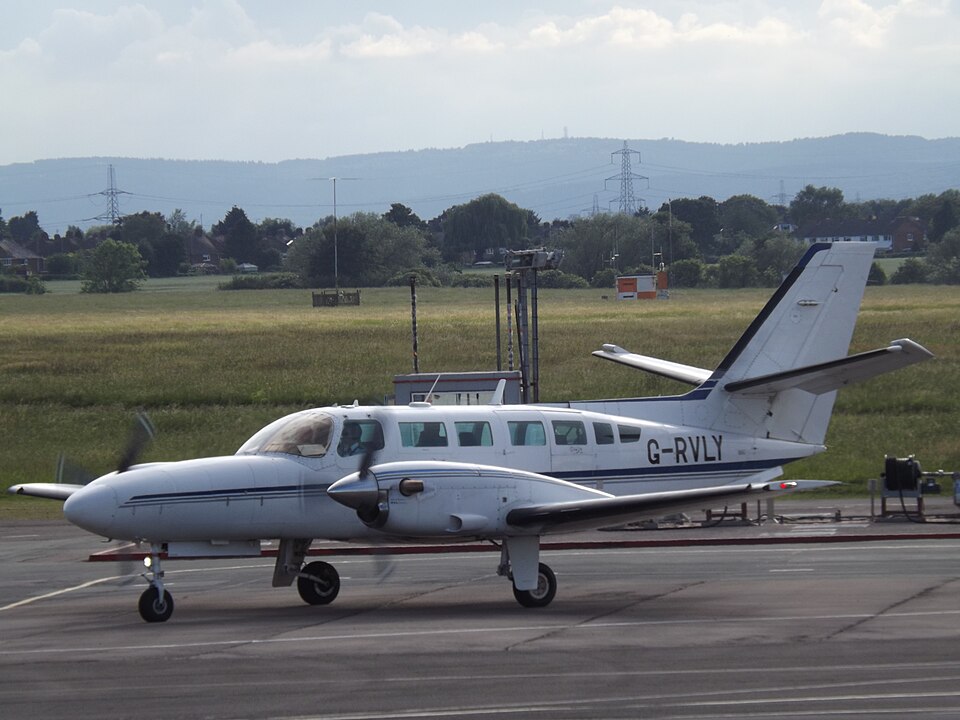
The aircraft, a Reims Cessna F406 Caravan II (registration G-RVLY), was a twin turboprop manufactured in 1988. It was not equipped with weather radar or windshear detection equipment. The pilot had 3,068 total flying hours, with 516 on type.
Conclusion
The aircraft encountered severe turbulence associated with an occluded front, leading to an uncontrolled descent. The forecast had included isolated severe turbulence, but this did not preclude the flight or the commencement of an approach. The pilot reported that upset prevention and recovery training (UPRT) he had received helped him manage the situation.