Aircraft and Flight Details
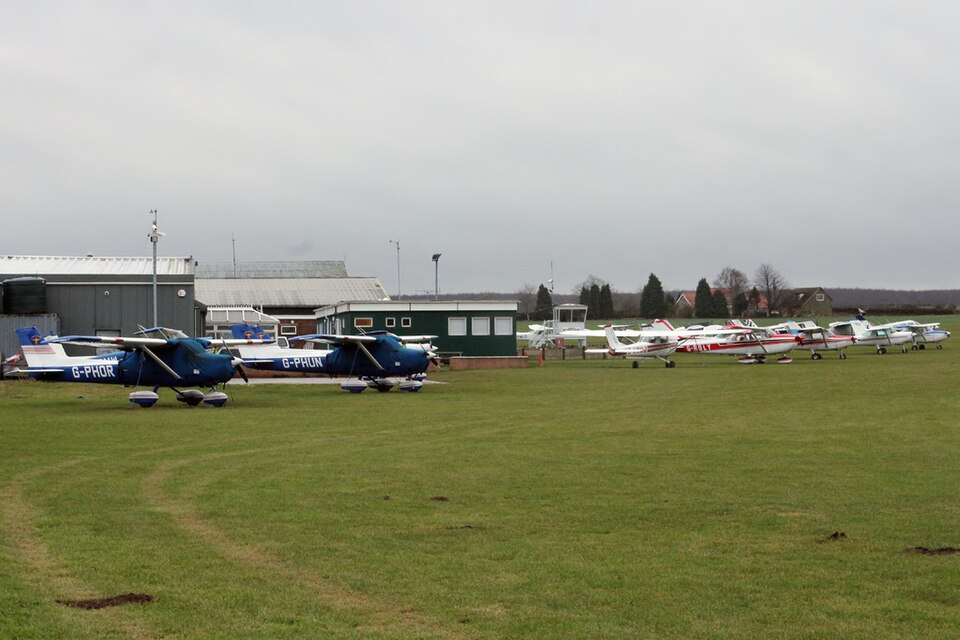
The accident involved a Reims Cessna FRA150L Aerobat, registration G-PHOR, powered by one Continental Motors Corp O-240-A piston engine. The aircraft was manufactured in 1972 (serial no. 0157). The flight was a training sortie at Netherthorpe Airfield, Nottinghamshire, on 11 August 2015 at 1455 UTC. The sole occupant was a 58-year-old student pilot with 18 hours total flying experience (all on type), including 15 hours in the last 90 days and 5 hours in the last 28 days. No passengers were on board.
Sequence of Events
Following a circuit training flight with his instructor, the student was cleared for his first solo circuit. The weather forecast obtained from Doncaster Sheffield Airport, about 11 nm away, indicated wind from 280° at 10 kt. The instructor observed the final approach to grass Runway 24 and reported that the approach “looked good and stable”. However, on landing, the aircraft bounced twice. After the second bounce, the aircraft pitched down, causing the nose landing gear to collapse onto the runway surface.
Aftermath and Damage
The pilot, uninjured, switched off the fuel and master switch before vacating the aircraft through the left door. The aircraft sustained damage to the nose gear, propeller, engine, engine frame, and left wing rear spar.
Pilot's Account
The pilot attributed the pitch-down to leaning forward onto the control yoke during the second bounce. The instructor later commented that he had expected the student to execute a go-around after the first bounce.