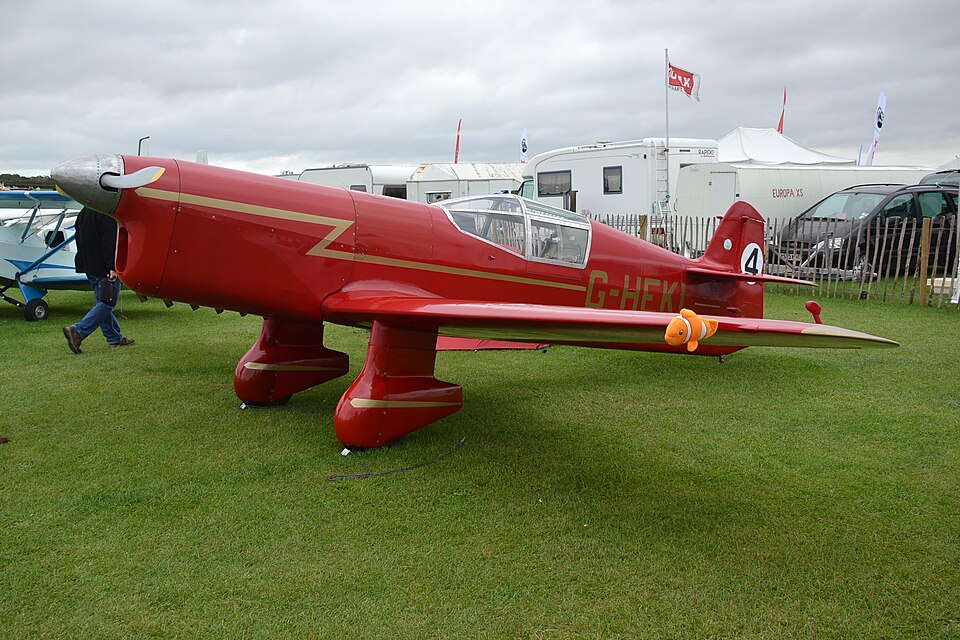
Incident Overview
On 18 April 2025, at approximately 1400 UTC, a replica Percival Mew Gull (registration G-HEKL) experienced an engine failure during a private flight near Great Massingham Airfield in Norfolk. The pilot, the sole occupant, was conducting a running-in flight following a recent top-end engine rebuild. After about 30 minutes of flight, the engine began to run roughly, and the No. 3 cylinder head temperature dropped. Shortly thereafter, an uncontained failure of the No. 3 cylinder connecting rod and piston occurred. The pilot executed a forced landing, during which the aircraft sustained damage to the engine, cowling, landing gear, and propeller. The pilot was not injured.
Aircraft and Engine Information
G-HEKL is a single-seat, low-wing monoplane of wooden construction with a tailwheel undercarriage and tail skid. It was completed in 2013 and had flown 428 hours. The aircraft was powered by a six-cylinder inverted De Havilland Gipsy Queen I piston engine, manufactured in 1936, with 436 hours running time. The engine had been stored from new until installation in G-HEKL, except for an inspection and partial strip in 1979. At the time of the accident, the engine was being run-in after a top-end rebuild that included new cylinders, overhauled heads, new guides, and new piston rings. Mineral oil was being used during the running-in process.
Engine Examination Findings
A full engine strip revealed extensive damage. A large hole was found in the right side of the crankcase, and the No. 3 piston and connecting rod were missing. The No. 3 big-end bearing shells were crushed and distorted; one was inside the empty No. 3 cylinder, and the other was lodged in the magneto and distributor gears. The attached quill drive shaft had failed in torsion. Main bearing No. 5 was severely overheated and had lost its white metal layer, and the bearing cap was cracked. The bearing cap bolts for Nos. 3, 4, and 5 were found to be only finger-tight, despite split pins and locking tabs in place. Other main bearings showed varying degrees of heat damage and wear. Big-end bearings Nos. 1 and 2 were undamaged, while No. 4 was intact but overheated, and Nos. 5 and 6 showed initial wear. Cylinder walls of Nos. 3 and 4 had thick white metal deposits, and several cylinders showed glazing. The oil filters contained very few metallic particles.
Analysis and Conclusion
The engine damage indicated that oil starvation began at main bearing No. 5. This led to inadequate oil supply to the No. 3 and No. 4 big-end bearings, which received their oil from the No. 5 main bearing. The resulting overheating caused the No. 3 big-end cap to fail, allowing the connecting rod and piston to exit the crankcase. Debris from the bearing shell jammed the magneto and distributor drive, shearing the drive shaft and stopping the engine. The exact cause of the oil starvation could not be fully determined, but contributing factors may have included high oil temperatures during running-in, looser bearing caps, and a cylinder honing finish that impeded ring bedding, potentially leading to glazing and increased oil consumption. The pilot conducted a forced landing after the cowl detached and oil obscured visibility. The aircraft tipped onto its nose upon stopping, but the pilot was able to exit unharmed.