Synopsis
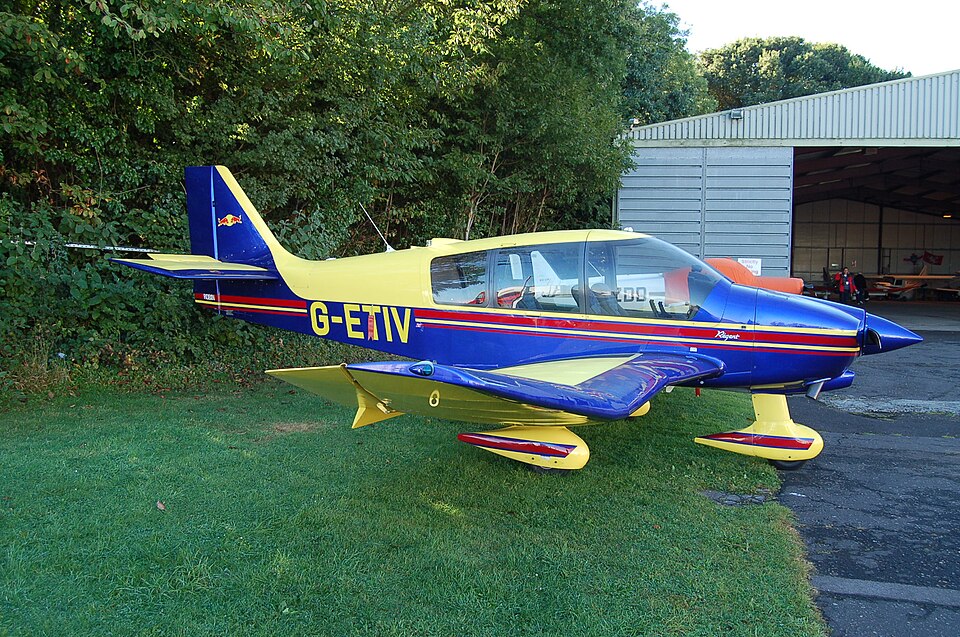
On 7 December 2016 at 1327 UTC, a Robin DR400/180 Regent (G-ETIV) operating as a private flight from Rochester Airport, Kent, struck a precision approach path indicator (APAPI) unit during a forced landing practice. The right mainwheel spat was severely cracked and the brake unit damaged. Both occupants, a pilot and a qualified flight instructor acting as a safety pilot, were uninjured.
History of the Flight
Six days after a minor eye operation, the pilot asked a qualified flight instructor (FI) to act as his safety pilot and occupy the right seat of the dual-control aircraft. The pilot believed his eyesight had recovered and thought having a safety pilot was a sensible precaution after six weeks without flying. The role of safety pilot was not discussed before the flight, and the FI did not consider himself as Pilot-in-Command (PIC).
Two parallel runways were in use: Runway 20L (relief) for takeoff and Runway 20R (main) for landing. The pilot was not informed that Runway 20R was used for landings. After takeoff, the aircraft departed the circuit area. The pilot requested to fly overhead for a practice forced landing (PFL) and go-around. The Flight Information Service Officer (FISO) instructed a right-hand circuit without specifying which runway. The pilot later stated he planned to use Runway 20L.
Pilot's Account
The first PFL approach toward Runway 20L was too high, so the pilot executed a go-around. On the second approach, the FI suggested the pilot warm the engine. The pilot stated he was about 15 ft above the ground, overcompensated for drift, and was about to apply power and right rudder when the FI overrode his controls without warning, turning the aircraft approximately 60° right. The pilot believed the aircraft was near stalling but regained control and landed on Runway 20R. After taxiing, he learned the right mainwheel struck an APAPI unit in the Runway 20L undershoot.
Instructor's Account
The FI had 10,309 total flying hours. He considered the flight a check flight, not instruction. During the second approach, he noted the aircraft was low and slow, and at approximately 400 ft suggested a clearing burst of power. He believed the pilot did not apply power long enough. The FI recalled directing a go-around, but the pilot did not react. At a late stage, recognizing a stalling configuration, the FI tried to take control by turning right toward Runway 20R without announcement. He believed intervention was necessary but could not explain why he did not announce taking control or initiate a go-around.
Airfield Observations
The airfield duty manager observed the aircraft approaching left of the Runway 20L approach path, appearing very low and slow. He estimated it was two feet above the ground when it abruptly veered right and struck the left APAPI unit, which detached from its mountings.
Medical Considerations
The pilot held an EU Class 2 Medical Certificate valid until 8 November 2017 with a limitation for corrective spectacles. On 1 December 2016, he underwent cataract removal on his right eye and was told he could drive two days later. He did not consult his Aero-Medical Examiner (AME) before flying. A day after the accident, an ophthalmologist reported his uncorrected vision as 20/20 or better in each eye.
Regulations
EASA regulations require licence holders not to exercise privileges when aware of decreased medical fitness, including after surgery, without seeking aero-medical advice. The role of 'safety pilot' is not a recognised role in normal operations; an Operational Safety Pilot Limitation (OSL) may be placed on a medical certificate requiring another qualified pilot to act as PIC.
Damage
The right mainwheel spat was severely cracked and the brake unit damaged. The APAPI unit was detached from its mountings.